
15 Easy Journaling Tips for Beginners (With Samples to Steal!)

How Should I Choose My First Journal?

Starting a journal can be one of the most rewarding habits you’ll ever develop. It provides a safe space to express thoughts, track personal growth, and reflect on daily experiences. Journaling requires no special skills—just a willingness to write honestly and consistently.
Many beginners worry about doing it “right,” but there’s no single correct approach. The best method is simply the one you’ll stick with. Whether you prefer digital apps or simple notepads, the important thing is to begin the practice and make it your own.
The first step is finding the right notebook, and I recommend beginning with an empty one and your favorite pen. As journaling experts confirm, nothing fancy is needed—just something that feels comfortable to write in.
Don’t worry about getting an expensive or elaborate journal. A basic spiral notebook or composition book works perfectly well. The important thing is that you have enough pages to develop your journaling habit.
Choose something that appeals to you personally. If you enjoy the look and feel of your journal, you’ll be more likely to use it regularly. A notebook that can lie flat when open makes journaling easier, preventing the frustration of fighting with pages that keep closing.
Remember that journaling is about the content, not the container. While beautiful journals exist, the most important part is that you make a commitment to yourself to write regularly.
Capture Your Day with Daily Reflections

Daily reflections are the heart of journaling. I find that setting aside just 5-10 minutes each day makes a huge difference in maintaining a consistent practice. This helps capture thoughts before they fade away.
When writing reflections, focus on what happened during your day that stood out. You might write about a conversation that made you think, a challenge you faced, or something that brought you joy. The key is being honest with yourself, a practice supported by wellness experts who suggest various journaling techniques for mental well-being.
Questions can make reflection easier. I ask myself: What went well today? What could have gone better? What am I grateful for? These prompts help when I’m not sure where to start.
I don’t worry about perfect writing in my reflections. Sometimes I use bullet points or a mixture of formats to express my thoughts more easily. The goal is expression, not perfection.
My reflections often include both positive and negative experiences. When I write about difficult moments, I try to include what I learned or how I might handle similar situations in the future. Some days I write a page, other days just a few sentences. What matters is making it a regular practice.
How Can I Document My Life and Special Moments?

Journaling is a perfect place to record what happens in your life. Writing about day-to-day experiences helps you see patterns and growth over time, creating a meaningful record you’ll appreciate later.
Try writing about a recent conversation that affected you or a place you visited and how it made you feel. Don’t worry about making your stories perfect. The goal is to capture your authentic experiences, not to create polished writing.
Dating your entries helps connect experiences to specific times in your life. Looking back at entries from years ago can instantly return you to those moments. Personal experiences can include big life events or small daily moments, which often become the most valuable entries to read later.
To preserve memories better than photos, try capturing special moments in vivid detail. Include all the sensory details—what you saw, heard, smelled, felt, and even tasted. This helps you relive the experience when you read your journal later.
For example, instead of writing “I had dinner with Mom,” you might write: “Mom’s kitchen smelled like cinnamon and apple pie tonight. Her laugh echoed against the yellow walls as I told her about my day.”
Details matter when describing special moments. Note the weather, location, and who was there. These small observations create a richer memory on the page. Also reflect on why the moment was significant to you to process the experience more deeply.
Overcome the Blank Page with Inspiring Prompts
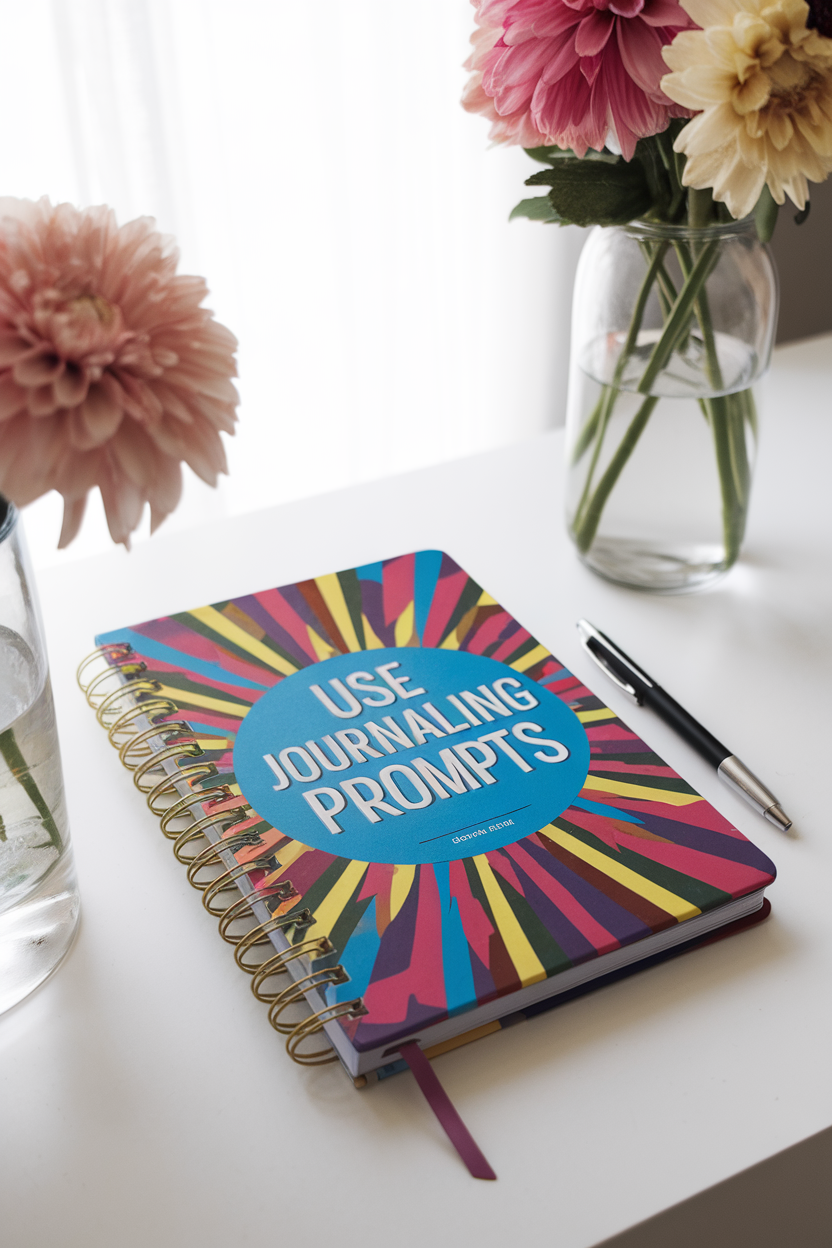
Starting with a blank page can feel overwhelming when you’re new to journaling. This is where journaling prompts come in handy. Prompts are questions or statements that give you something specific to write about.
I find that prompts help eliminate the “I don’t know what to write” problem that many beginners face. They provide direction and purpose to your journaling practice, especially on days when inspiration is lacking.
You can find hundreds of journal prompts online covering various topics. Some popular categories include gratitude, self-reflection, goals, and daily experiences. Guides for beginners often include lists of prompts to help you get started.
Simple prompts work best when you’re just starting out. Try basics like “What made me smile today?” or “One challenge I faced today was…”
Another approach is to focus on specific themes like gratitude, favorite moments, achievements, or connections with others. These themes can guide your writing if you’re feeling stuck.
I recommend keeping a list of your favorite prompts in your journal or saved on your phone. This way, you’ll always have something to write about when you sit down with your journal.
Explore Different Journaling Styles

Journaling isn’t one-size-fits-all, and trying different styles can help you find what works best. There are many approaches to journaling that serve different purposes. I recommend experimenting to discover which ones you connect with most.
Gratitude journaling involves writing down things you’re thankful for each day. To start, simply list 3-5 things you are grateful for, whether they are big relationships or small joys like a cup of coffee. This style can boost your mood and help you focus on the positive aspects of life.
Bullet journaling combines planning, tracking, and note-taking in one customizable system. It uses symbols and short phrases to organize information quickly. This method works well if you like structure and visual organization.
Stream of consciousness writing means putting down your thoughts exactly as they come to you without editing. There are no rules—just write whatever pops into your mind for a set time. I’ve found this especially helpful for clearing mental clutter.
Other styles include dream journals to analyze dreams, art journals that use visuals instead of words, and nature journals to document observations about the natural world. Try dedicating a week to each style to see which one feels most beneficial.
Make It Visual with Photos and Drawings

Adding visual elements to your journal can bring your entries to life. Photos and drawings create a rich, multi-dimensional record of your experiences that words alone can’t capture. I find that visual journaling helps me express feelings that are hard to put into words.
You don’t need artistic talent to include visuals. Try pasting printed photos from your phone using a simple glue stick. You can get creative inspiration from visual journaling tips.
For something more creative, try painting over self-portraits or modifying photographic images with pencil or markers. This technique adds a personal artistic touch to your photographs.
Photo journaling can become a practice all its own. I’ve discovered that capturing daily moments through images creates a powerful visual diary of my life experiences. Simple sketches, doodles, or even traced images can work wonderfully if you’re not comfortable with drawing.
The goal isn’t perfection—it’s personal expression and memory preservation.
How Should I Journal About Important Conversations?

Journaling about important conversations can help us process our thoughts and feelings about these interactions. I find it valuable to write down meaningful talks with friends or family soon after they happen. This practice helps me remember details that might otherwise fade.
When recording conversations, focus on what was said that struck you as important or surprising. Include your emotional reactions and any insights you gained during the discussion. You might also note body language or tone that added meaning beyond the words.
Significant conversations often shape our relationships and decisions. By writing them down, you create a record of how your connections with others evolve over time. This is one of many wonderful things to write about in your journal.
I recommend including direct quotes when possible to capture the exact words that impacted you. Note the setting, date, and context of the conversation to give it more meaning when you read it later. You can also use these entries to prepare for future conversations.
How Can I Journal About My Emotions?
When journaling, I find it helpful to write exactly how I feel without judging my emotions. This practice, often called therapeutic journaling, creates a safe space for self-reflection. I don’t worry about perfect grammar; I focus on raw truthfulness.
Sometimes I start with simple prompts like “Today I feel…” or “I’m struggling with…” to get my emotional writing going. If I notice I’m censoring myself, I pause and remind myself that my journal is private.
An emotion journal becomes a personal log book that allows me to track patterns in my moods over time. This awareness helps me understand what triggers certain feelings and how I typically respond.
To add structure, you can create a mood tracker to visualize your emotional state. To start, decide on a format, like a calendar or mandala, and create a color key for different emotions, like yellow for happy or blue for sad.
Each day, fill in the corresponding space with the color that matches your mood. You can use washi tape for a quick tracker or a small graph if your mood fluctuates. Reviewing your tracker monthly helps spot trends between your activities and emotions.
How to Use Your Journal for Goals and Aspirations

Journaling about your future dreams and goals can bring clarity to your path forward. Writing about where I want to be in 3-5 years helps me understand what truly matters. This type of journaling connects your present actions to your long-term vision.
When exploring aspirations, try to be specific about what you want to achieve in your career or personal life. Dreams become more achievable when clearly defined on paper. Ask yourself questions like “What would my ideal day look like in five years?” or “What accomplishments would make me proud?”
Journaling is also a powerful tool for tracking your journey toward these goals. Writing about both achievements and challenges gives a balanced view of progress. You can use prompts like “What are my current priorities?” to focus your thoughts.
One effective approach is the GOAL journaling method, a 4-step process for tracking everyday progress. Note where you went, what you did, and who you spoke with. Make sure to celebrate small wins, not just big milestones, to stay motivated and make adjustments when needed.
How Can I Use Inspiring Quotes in My Journal?
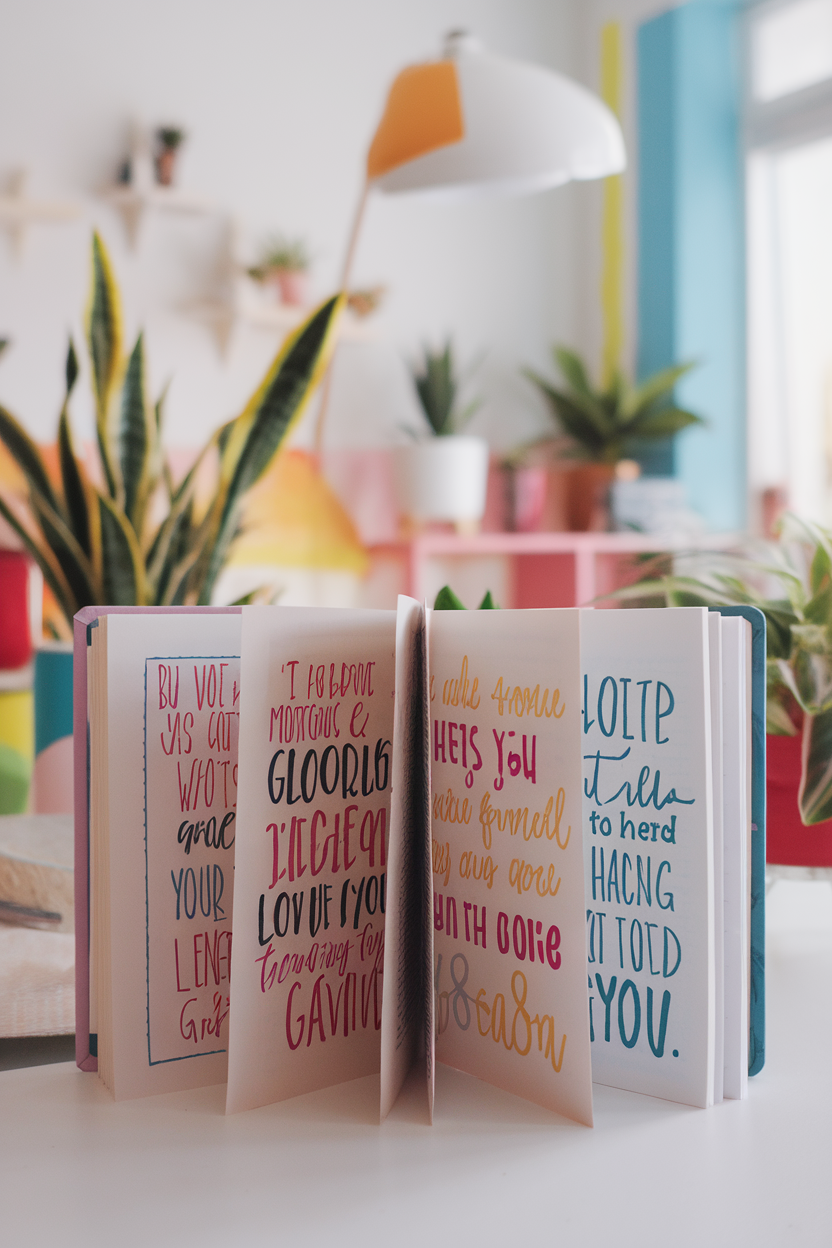
Quotes can be a powerful addition to your journal, injecting wisdom and motivation into your pages. I like to dedicate space for quotes that resonate with me, creating a personal inspiration notebook I can turn to again and again.
You can organize quotes by theme or scatter them throughout your regular entries. I find that adding a meaningful quote at the top of a new journal page often sets the tone for my writing and helps me focus my thoughts.
Sources for quotes can include books, podcasts, conversations, movies, or even online quote collections. When a line strikes me, I immediately write it down along with the source and date so I can revisit it later.
Try using different fonts or colors to make your favorite quotes stand out visually. Some journalers create dedicated pages with artistic lettering for quotes that particularly move them.
Quotes can also serve as powerful journal prompts when you’re feeling stuck. I often select a quote and write about how it applies to my current situation or challenges my thinking.
Document Your Adventures and Travel Experiences

Journaling while traveling creates a rich record of your adventures that you’
12) Describe A Special Moment In Detail

When journaling, I find that capturing special moments in vivid detail helps preserve memories better than photos sometimes. I try to include all the sensory details – what I saw, heard, smelled, felt, and even tasted during that moment. This helps me relive the experience when I read my journal later.
For example, instead of writing “I had dinner with Mom,” I might write: “Mom’s kitchen smelled like cinnamon and apple pie tonight. Her laugh echoed against the yellow walls as I told her about my day. The warmth of her hand on mine felt like home.”
Details matter when describing special moments. I make sure to note the weather, the exact location, who was there, and even what people were wearing. These small observations create a richer memory on the page.
I also reflect on why this moment matters to me. Was it unexpected? Did it change something in me? Understanding the significance helps me process my experiences more deeply.
Some days I record a key conversation that touched me, writing down the exact words that made an impact. Other times, I focus on a fleeting feeling that I want to remember forever.
13) Create A Mood Tracker
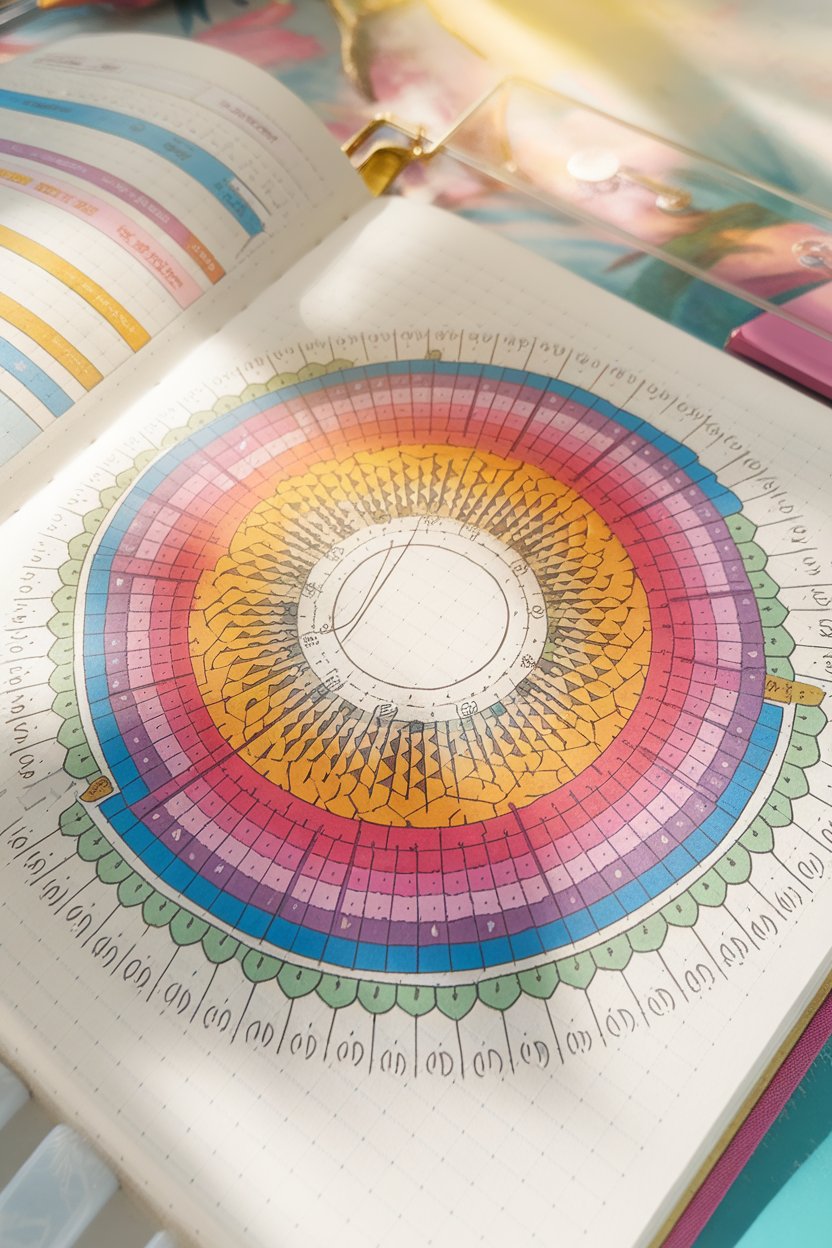
Tracking your mood can help you identify patterns in your emotions and gain insights into what affects your mental well-being. A mood tracker is a simple yet effective tool that many bullet journal enthusiasts use to visualize their emotional state over time. I find that seeing my moods displayed visually helps me understand myself better.
To start a mood tracker, first decide what format works best for you. You might prefer a calendar style using the dot grid in your journal or something more creative like a mandala or flower design. Then create a color key that represents different emotions – perhaps yellow for happy, blue for sad, purple for anxious.
Each day, I fill in the corresponding space with the color that matches my mood. Some people use washi tape for a quick and easy tracker that doesn’t require artistic skills. If your mood fluctuates throughout the day, you could use a small graph instead of a single color block.
Review your tracker monthly to spot trends. I often notice connections between my daily activities and mood shifts that I wouldn’t have recognized otherwise. This simple practice has become an essential part of my self-care routine.
14) Document Travel Experiences

Journaling while traveling creates a rich record of your adventures that you’ll treasure for years. A travel journal allows you to record thoughts, feelings, and experiences during your journeys. I find that documenting my travels helps me appreciate moments more deeply and remember details I’d otherwise forget.
When I travel, I bring a dedicated notebook and make daily entries about places visited and people met. I include small sketches of landmarks or interesting objects, which adds a personal touch even if I’m not an artist.
Collecting physical mementos like tickets, maps, or pressed flowers to paste into your journal creates a multi-dimensional record. I’ve found that writing about the foods I ate and new dishes I tried helps capture the sensory experience of travel.
Take time each evening to reflect on what surprised or moved you that day. I sometimes include quotes from locals or fellow travelers that gave me new perspectives.
You can also document your travels through photography and paste printed photos into your journal with captions. This combination of writing and visuals creates a complete memory of your journey.
15) Explore Future Aspirations

Journaling about your future dreams and goals can help bring clarity to your path forward. I find that writing about where I want to be in 3-5 years helps me understand what truly matters to me. This type of journaling connects your present actions to your long-term vision.
When exploring aspirations in your journal, try to be specific about what you want to achieve. Write about your career goals, personal development objectives, or life milestones you hope to reach. Dreams become more achievable when clearly defined on paper.
I recommend dedicating regular journal sessions specifically to updating and refining your aspirations. Your goals may change over time, and that’s perfectly normal. Reviewing these entries can show you how your priorities have evolved.
Ask yourself questions like “What would my ideal day look like in five years?” or “What accomplishments would make me proud?” These prompts encourage deeper thinking about what you truly want. Writing about your big-picture dreams can transform vague wishes into concrete objectives.
Understanding The Benefits Of Journaling
Journaling offers powerful advantages that extend beyond simple record-keeping. The practice transforms how we process thoughts and emotions while enhancing our creative abilities.
Mental Health and Clarity
Journaling helps me gain better understanding of my thoughts and emotions. When I write regularly, I notice my stress levels decrease significantly. This happens because putting thoughts on paper creates distance from overwhelming feelings.
Research shows journaling can actually lower blood pressure and improve sleep. I’ve found this to be true in my own experience.
The process works because our brains get better at managing emotions with regular journaling practice. As I write consistently, my amygdala becomes calmer, helping me respond rather than react to situations.
Key benefits for mental clarity include:
- Reduced anxiety and stress
- Better emotional regulation
- Improved problem-solving abilities
- Enhanced self-awareness
Boosting Creativity
Journaling unlocks creative potential by creating space for new ideas to form. I’ve discovered that writing without judgment allows thoughts to flow freely.
Many successful writers and artists maintain journals as part of their creative practice. The habit builds a muscle for self-expression that carries into other areas.
When I journal regularly, I notice connections between seemingly unrelated ideas. This pattern recognition becomes a valuable tool for creative problem-solving in my daily life.
Journaling benefits students by supporting both academic and personal growth. I’ve found it particularly helpful for breaking through creative blocks when I feel stuck on projects.
Creativity-boosting journal techniques:
- Stream of consciousness writing
- Visual elements (sketches, diagrams)
- “What if” scenarios
- Collecting inspiring quotes and ideas
Getting Started With Journaling

Starting a journal requires just a few key decisions to set yourself up for success. The right materials and consistent habits make all the difference in creating a sustainable practice.
Choosing The Right Journal
The first step in your journaling journey is selecting the right journal for your needs. I recommend considering both physical journals and digital options based on your lifestyle. Physical journals offer a tactile experience that many find soothing, while digital journals provide searchability and backup features.
Consider these factors when choosing:
- Size: Small enough to carry or large enough for extensive writing
- Paper quality: Thicker pages prevent bleed-through
- Binding: Spiral-bound journals lay flat when open
- Design: Plain, lined, dotted, or grid pages depending on your writing style
Your journal should feel inviting to you. I’ve found that when I love my journal’s look and feel, I’m more likely to write in it regularly.
Establishing a Routine
Consistency is the foundation of successful journaling. Creating a regular practice helps make journaling a natural part of your life rather than another task on your to-do list.
I suggest starting with just 5-10 minutes daily at a consistent time.
Many beginners find success by attaching journaling to an existing habit like morning coffee or before bedtime.
Start small and be specific. Instead of promising to “write every day,” try “I’ll write three sentences after breakfast” to build momentum.
Keep your journal visible as a physical reminder.
Don’t worry about perfect grammar or beautiful handwriting. The goal is to express your thoughts, not create a masterpiece.
Some days you’ll write more, others less—and that’s perfectly normal.