
Best Red Light Therapy for Knee Pain Devices in 2025 (Arthritis & Injury)

Who benefits most from red light therapy for knee pain?

Red light therapy tends to help most when your knees feel stiff, achy, or swollen—especially in the morning or after you’ve been sitting for a while. If your pain is more about sharpness, locking, or instability, this probably isn’t the tool you need.
It works better for discomfort tied to inflammation or overuse than for advanced cartilage loss or joint deformity. Think of it as something that helps calm down irritated tissue, not something that rebuilds what’s worn away.
If your pain came on suddenly, feels severe, or shows up with redness, fever, or an inability to bear weight, you need a clinician’s attention first. Red light therapy isn’t a substitute for medical evaluation when something more serious might be going on.
It works alongside what you’re already doing—ice, stretches, supplements—rather than replacing any of it. It doesn’t interfere with medications or other therapies, so you can layer it into your routine without worrying about conflicts.
Is red light therapy worth the investment?

Devices range from around $150 to $600. Cheaper panels might work fine, but they often require longer sessions or more frequent use to match the results you’d get from a higher-powered unit.
You’re looking at daily sessions of 10 to 20 minutes for at least four to six weeks. Consistency matters more than session length—skipping days or using it sporadically won’t give you much to work with.
The benefit you’re likely to see is a gradual reduction in stiffness and ache, making movement feel easier. It’s not a complete fix. You’ll still have some discomfort, but the edge may come off enough to make daily tasks less of a grind.
Compared to physical therapy or injections, it’s lower cost and lower risk. But it’s also less targeted and less predictable. You’re trading precision for convenience and safety.
What are the realistic limitations?
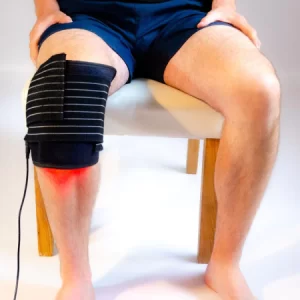
This won’t rebuild cartilage or reverse structural damage. It works best when inflammation or soft-tissue strain is part of the problem. If your knees are worn down to bone-on-bone, red light therapy isn’t going to change that.
Results vary widely. Some people feel relief within days. Others need weeks. And some notice little change at all, even after consistent use. There’s no way to predict which group you’ll fall into.
It’s not a standalone solution. It works best when paired with movement, strength work, and healthy habits. If you’re sitting still and expecting the light to do all the work, you’re likely to be disappointed.
If your pain is mostly mechanical—grinding, locking, giving way—this may not address the root issue. Those symptoms point to structural problems that need a different approach.
What should you realistically expect?

The first few sessions may feel like nothing, or just a mild warmth. Noticeable change often takes two to four weeks of consistent use. That’s a long time to wait without knowing if it’s working, but that’s how it goes.
Early signals to watch for: less morning stiffness, easier to stand up after sitting, or a slight reduction in ache after activity. These are small shifts, not dramatic turnarounds.
Plateaus are common. Improvement may slow after four to six weeks even if you keep using it. That doesn’t mean it stopped working—it means you’ve hit the limit of what it can do for you.
Don’t expect complete pain relief, sudden mobility gains, or a return to pre-injury function. If that’s your benchmark, you’re setting yourself up for frustration.
How does red light therapy actually work?
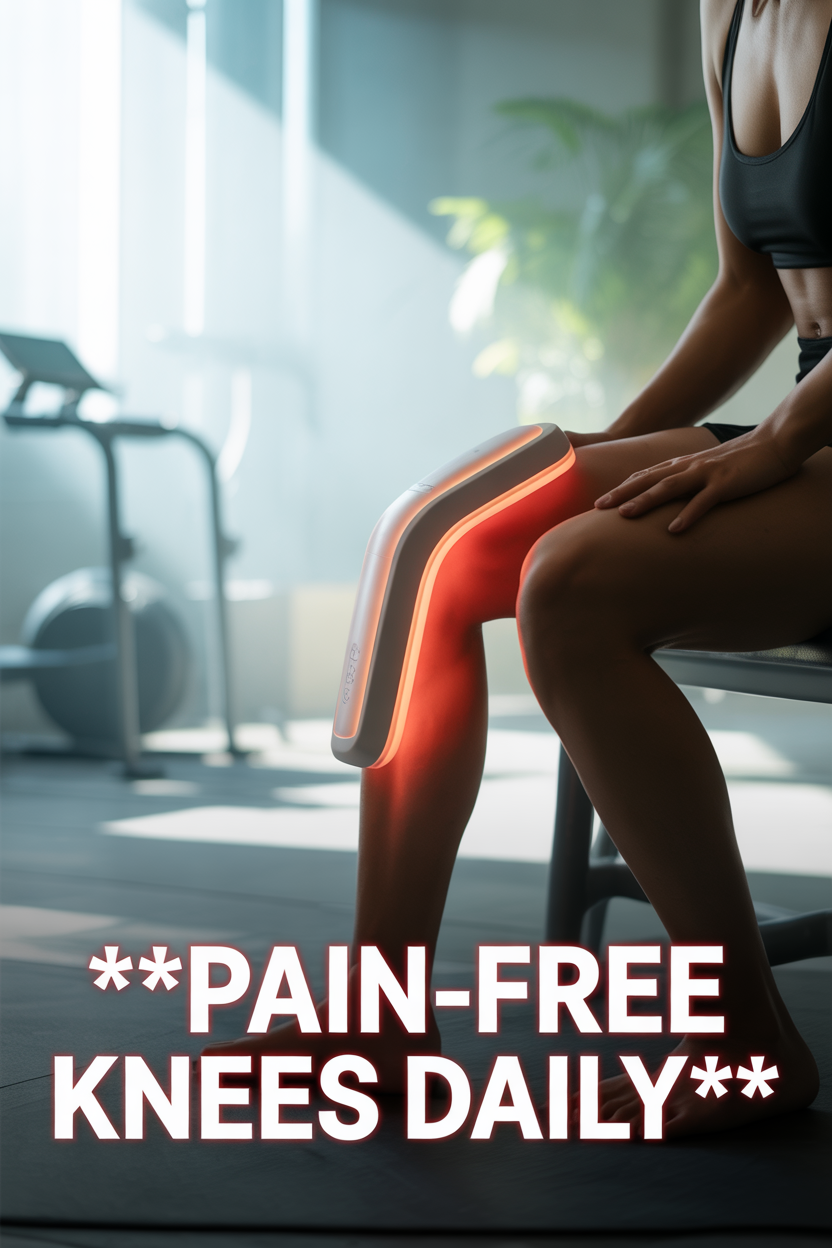
The light penetrates skin and tissue, reaching cells that produce energy. This helps calm inflammatory signals and support recovery. It’s not magic—it’s a biological response to a specific wavelength of light.
Near-infrared wavelengths (830–850nm) go deeper, reaching joint structures and surrounding soft tissue. Red wavelengths stay closer to the surface. Both have a role, but near-infrared is what gets to the knee joint itself.
The effect is cumulative. Each session builds on the last, which is why consistency matters more than intensity. One long session won’t do what six shorter ones can.
What details matter when choosing and using a device?
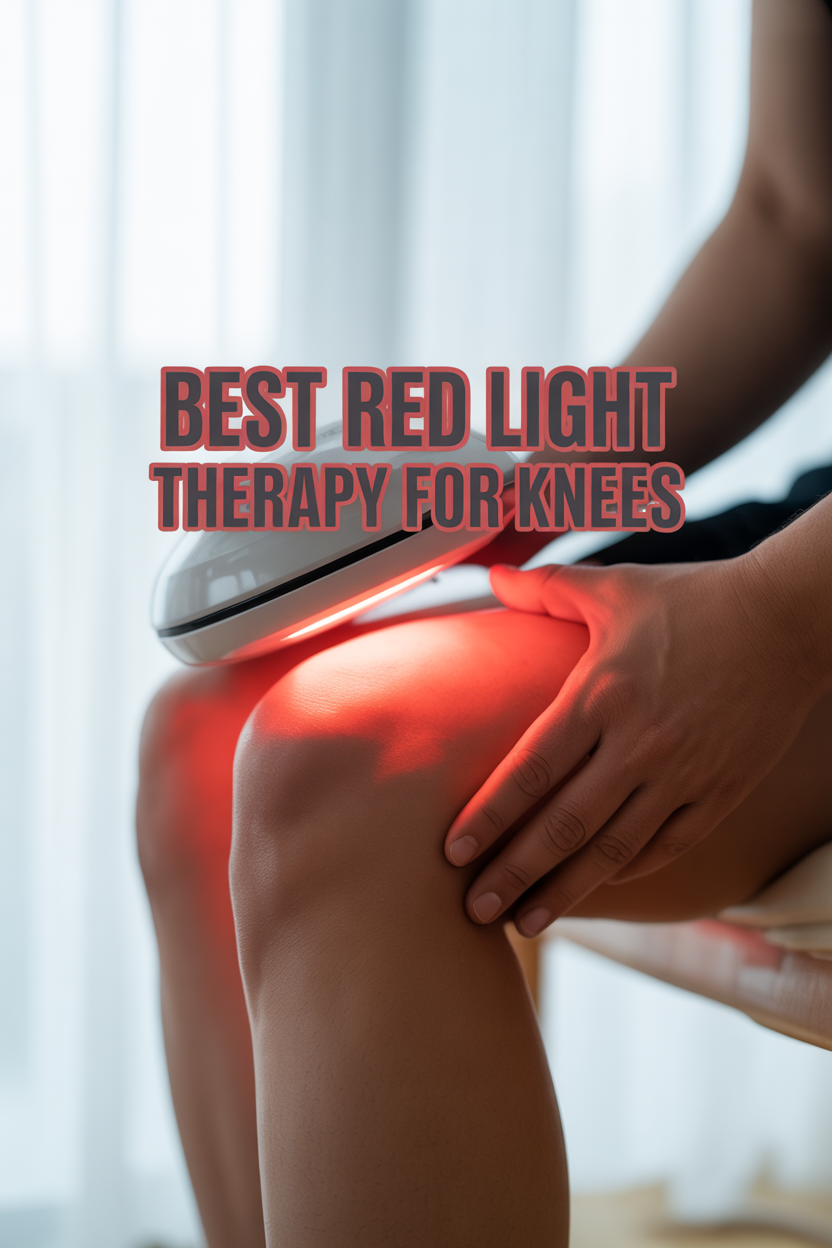
A device that wraps around the knee delivers light more evenly than a flat panel. Direct skin contact improves results, so you want something that sits close without gaps.
Higher power doesn’t always mean better. Matching the right dose—energy per session—across the whole knee is more important than raw wattage. A weaker device used correctly can outperform a stronger one used poorly.
Avoid overuse. Temporary warmth or redness can happen if sessions are too long or the device is too close to the skin. If that happens, back off for a day or two and adjust your approach.
Common mistakes: skipping sessions, expecting instant results, or stopping too soon when improvement plateaus. The first two are obvious. The third one catches people off guard because they think the plateau means it’s not working anymore.
When does red light therapy make sense—and when should you skip it?
This makes sense if your knees are stiff and achy, you’ve tried basic remedies without enough relief, and you’re looking for a low-risk, home-friendly option to support recovery. It’s a reasonable next step when simpler things haven’t been enough.
It’s reasonable to walk away if your pain is severe, mechanical, or tied to advanced joint damage. This won’t rebuild cartilage or fix structural issues. If that’s what you’re dealing with, you need a different kind of help.
Red light therapy fits into a broader plan as a tool for comfort and recovery, not as a cure or replacement for movement, strength, or medical care. If you can keep that in perspective, it’s easier to decide whether it’s worth trying.