
Do Red Light Therapy Face Masks Actually Work for Fine Lines and Uneven Texture?

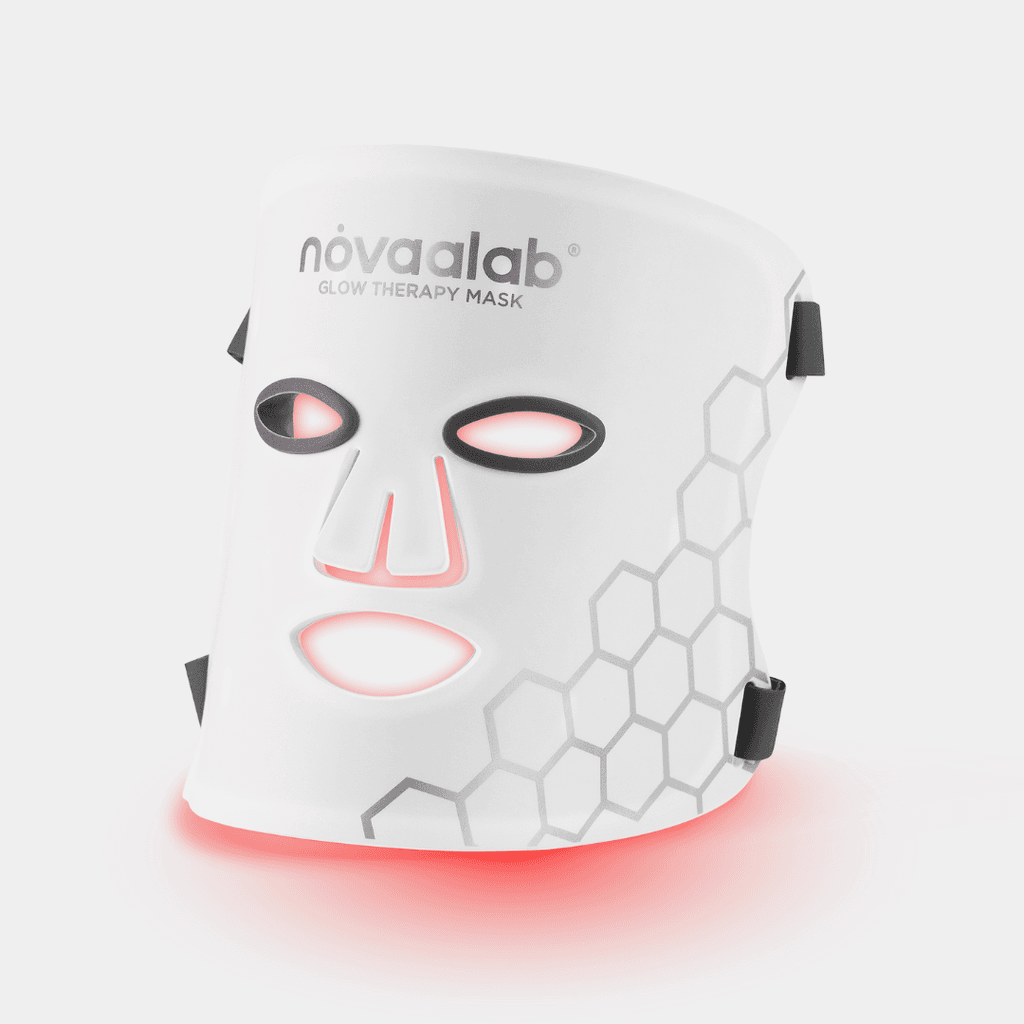
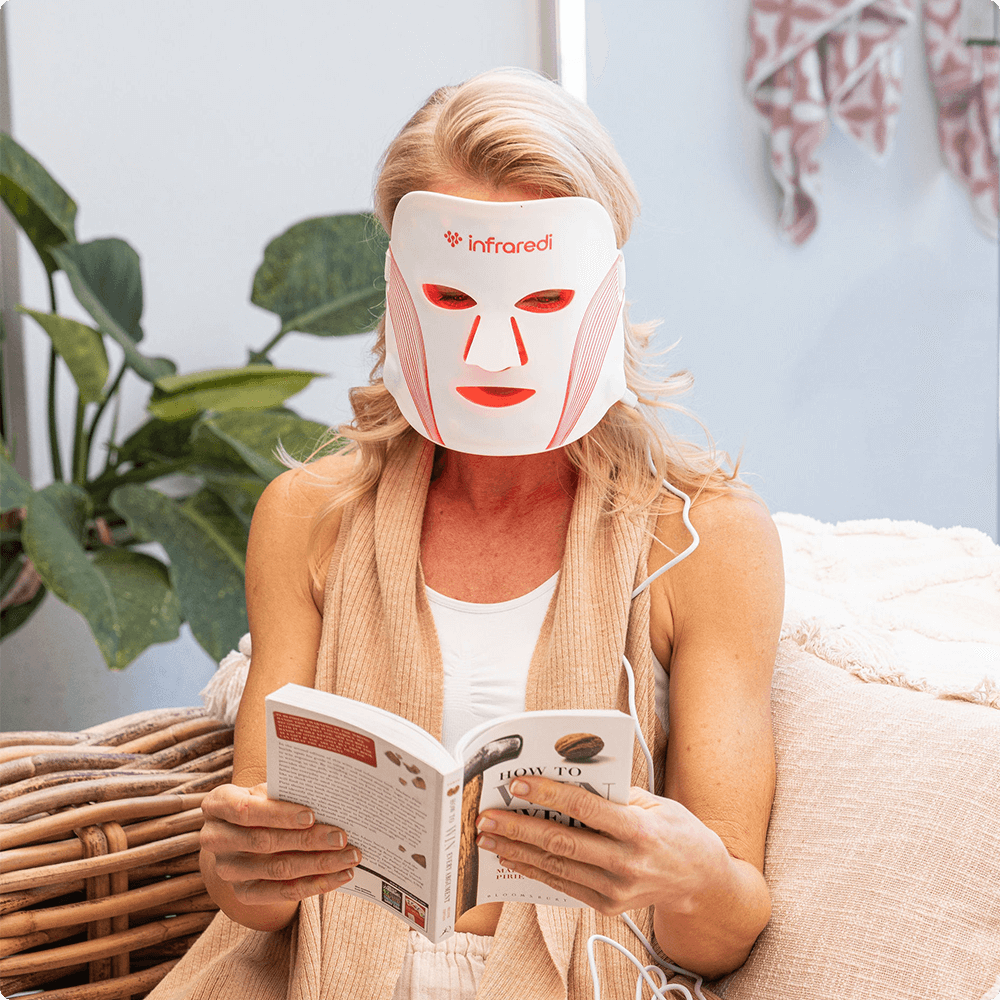

What You’re Really Hoping a Red Light Face Mask Can Do for Your Skin

You’re noticing those small but persistent signs of aging—fine lines around your eyes, a rougher texture, or a loss of that once-smooth feel. These aren’t dramatic changes, but they’re enough to make you curious about something that might help without being invasive or disruptive.
Photobiomodulation (PBM), the science behind red light therapy, is described in clinical terms as a safe, non-thermal approach. It doesn’t heat the skin, yet studies have shown measurable reductions in wrinkles. For example, a split-face randomized trial compared red light on one side of the face to amber light on the other. After 10 sessions over four weeks, both wavelengths reduced wrinkle volume by about 30%.
That same trial found improvements in wrinkles but not in hydration or skin elasticity at the tested dose and schedule. The studies focused on specific groups—like 137 women aged 40 to 65 with skin types II to IV, or 20 healthy volunteers aged 45 to 70 in a three-month LED mask study. The results may not apply universally, but they offer a starting point for understanding what’s possible.
If you’re interested in the science behind these findings, these resources provide deeper context:
- A review of photobiomodulation mechanisms
- The split-face randomized trial comparing red and amber light
- The three-month LED mask study
- Dermatology guidance from UCLA
How Red Light Therapy Fits Into Your Existing Routine

The at-home schedule from the LED mask study involved 12-minute sessions twice a week for three months, with sessions spaced 72 hours apart. That’s about 24 minutes a week, or roughly five hours total over the full study period.
The clinical protocol in the larger randomized trial was more condensed: 10 sessions over four weeks. Each side of the face received either red light at 660 nm or amber light at 590 nm at the same dose. By the end of the treatment, periocular wrinkle volume had decreased by about 30% on both sides.
In the three-month LED mask study, participants kept their usual skincare routines—cleansers, moisturizers, and makeup—unchanged. The mask was an addition, not a replacement. If you already have a routine you like, this is something you’d layer on top, not swap out.
What Changes You Can Expect—and What the Evidence Actually Supports

Wrinkles around the eyes were measured in a split-face randomized trial involving 137 women. Periocular wrinkle volume decreased by 31.6% with 660 nm red light and 29.9% with 590 nm amber light after 10 sessions over four weeks at 3.8 J/cm². These were measurable, not subtle, changes.
However, in that same trial, neither protocol improved skin hydration or elasticity at the tested dose and schedule. The light reduced wrinkles but didn’t make the skin more supple or better hydrated. These are distinct outcomes, and they didn’t move in tandem.
The LED mask study tracked crow’s feet depth and dermal density over time. Crow’s feet depth decreased by 15.6% at day 28, 34.7% at day 56, and 38.3% at day 84. Dermal density, measured by ultrasound, increased by 26.4% at day 28, 41.0% at day 56, and 47.7% at day 84. The improvements grew more pronounced with continued use.
Other skin-quality measures in the same study followed a similar pattern. Firmness (R0) improved by 23.6% by day 84, elasticity (R5) increased by 18.7%, roughness decreased by 23.8%, and pore diameter shrank by 32.8%. These were objective measurements, not subjective impressions.
When You’ll Start Seeing Results—and How Long They Last

The earliest checkpoint in the LED mask study was day 28. By then, measurable improvements were already visible in crow’s feet depth, facial sagging, firmness, dermal density, roughness, and pore diameter. You don’t have to wait three months to see progress.
Some measures, like elasticity (R5) and complexion homogeneity, only became significant at day 56. Most improvements continued to develop through day 84, showing that the benefits weren’t static after the first month.
Durability was tested in the LED mask study by repeating measurements 14 and 28 days after stopping treatment. The values remained stable, matching the results at day 84. However, the study didn’t track durability beyond that point. You know the changes last at least a month after stopping, but there’s no data on whether they persist for six months or longer without continued sessions.
In the randomized trial, periocular wrinkle volume was measured before and after a four-week course of 10 sessions. The reduction was about 30% within that timeframe—a shorter protocol than the three-month study but still showing measurable change in a month.
What’s Actually Happening Under the Light—and What Counts as Evidence

The LED mask study described photobiomodulation as producing cellular-level effects, including increased mitochondrial ATP production and signaling related to repair and regeneration. Cytochrome c oxidase is one proposed target, suggesting these changes happen inside cells, not just on the skin’s surface.
A review of the research highlights collagen-related findings in some PBM studies, such as increased type I collagen and reduced metalloproteinases—enzymes that break down collagen. These point to structural changes in the skin, not just temporary plumping. Clinical outcomes like improved wrinkles and firmness were observed in repeated-session protocols.
The evidence in these studies came from objective measurements at defined endpoints. For example, periocular wrinkle volume in the four-week randomized trial and crow’s feet depth plus multiple skin-quality measures at days 28, 56, and 84 in the three-month mask study. The results weren’t based on how participants felt or what they saw in the mirror—they were based on what instruments measured.
What Matters in the Device and Setup for Real Results

The studies reported benefits at specific wavelengths and doses. The randomized trial used 660 nm at 3.8 J/cm² for red light and 590 nm at the same dose for amber light over 10 sessions in four weeks. The LED mask study used 630 ± 10 nm at 15.6 J/cm² for 12 minutes per session, twice a week for three months. These settings aren’t interchangeable.
Session spacing was part of the tested protocol in the LED mask study. Sessions were spaced 72 hours apart because, as the paper noted, cells need time to process the energy. Daily use wasn’t part of the protocol that produced results.
The LED mask study also required protective eyewear during each session. This wasn’t optional. UCLA’s dermatology guidance notes that people with darker skin tones may be more sensitive to red light and could experience hyperpigmentation—a risk that’s acknowledged, not ignored.
Are You Ready to Commit to the Conditions That Actually Work?

The LED mask study’s protocol included 12-minute sessions twice a week for three months, with sessions spaced 72 hours apart. The face had to be clean and makeup-free during sessions, and protective eyewear was mandatory. If you’re not willing to follow all of these steps, you’re not replicating the conditions that produced the measured results.
The randomized trial’s protocol was shorter—10 sessions over four weeks—but still required specific parameters. Each side of the face received a different wavelength at the same energy dose, and wrinkle volume was measured before and after treatment. It’s a defined commitment, not a casual experiment.
What the Evidence Can—and Can’t—Tell You

The evidence covers short, defined timeframes. Four weeks in the randomized trial for periocular wrinkle volume. Days 28, 56, and 84 in the LED mask study for multiple measures. You’re not looking at years of data—just weeks and months.
Hydration may not improve even when wrinkles do reduce. The randomized trial found no change in hydration or viscoelasticity at the tested protocol. If you’re hoping for plumper, more hydrated skin, this isn’t the outcome the evidence supports at these doses and schedules.
Durability in the LED mask study was measured up to 14 and 28 days after stopping treatment. The results remained stable at those checkpoints, but there’s no data on whether they last six months or a year without continued sessions. You know the changes last at least a month after stopping, but beyond that, the evidence doesn’t say.