
15 Ways to Bullet Journal Your To-Do Lists (Game Changer!)

Start with the Foundation: Your Master Task List

Bullet journals have become my go-to system for managing tasks and staying organized. I’ve found that using a bullet journal as a to-do list combines creativity with productivity in a way digital apps can’t match.
A bullet journal helps turn scattered thoughts into actionable items, creating a mindful space for self-organization. It does this through a simple system of symbols, collections, and indexes that you can customize to fit your specific needs.
The foundation of using a bullet journal for task management is creating a Master Task List. I dedicate a full page where I collect all tasks that come to mind, which helps free up mental space.
When I first set up my master list, I perform a “brain dump” of all my pending tasks without worrying about organization. This includes personal errands, work projects, household chores, and any other responsibilities.
The beauty of a master list is that it prevents tasks from falling through the cracks. I can add to it whenever new responsibilities arise without disrupting my daily planning.
For very long lists, I sometimes use a running to-do list format that extends across multiple pages. This gives me plenty of space while keeping everything neat and organized.
Prioritize Your Tasks to Focus on What Matters

When using my bullet journal as a to-do list, sorting tasks by priority makes a huge difference in my productivity. This simple act reduces feelings of overwhelm and brings clarity to my day.
One effective approach is to create a Top 3 priority system. I identify the three most important tasks that need my attention each day, which helps me focus my energy on what truly matters.
For my remaining tasks, I use a simple coding system to mark their importance. I might use stars, colors, or numbers to indicate high, medium, and low priority items.
The master task list approach helps me collect all tasks in one place before distributing them according to priority. This prevents important items from getting lost in the shuffle.
I’ve learned that not everything can be high priority. By being honest about what truly needs immediate attention, I make better decisions about how to use my time and energy.
When tasks remain unfinished, I reevaluate their priority for the next day. This intentional approach to unfinished tasks keeps my to-do list relevant and prevents the buildup of low-priority items.
Develop Your Personal Key for At-a-Glance Clarity
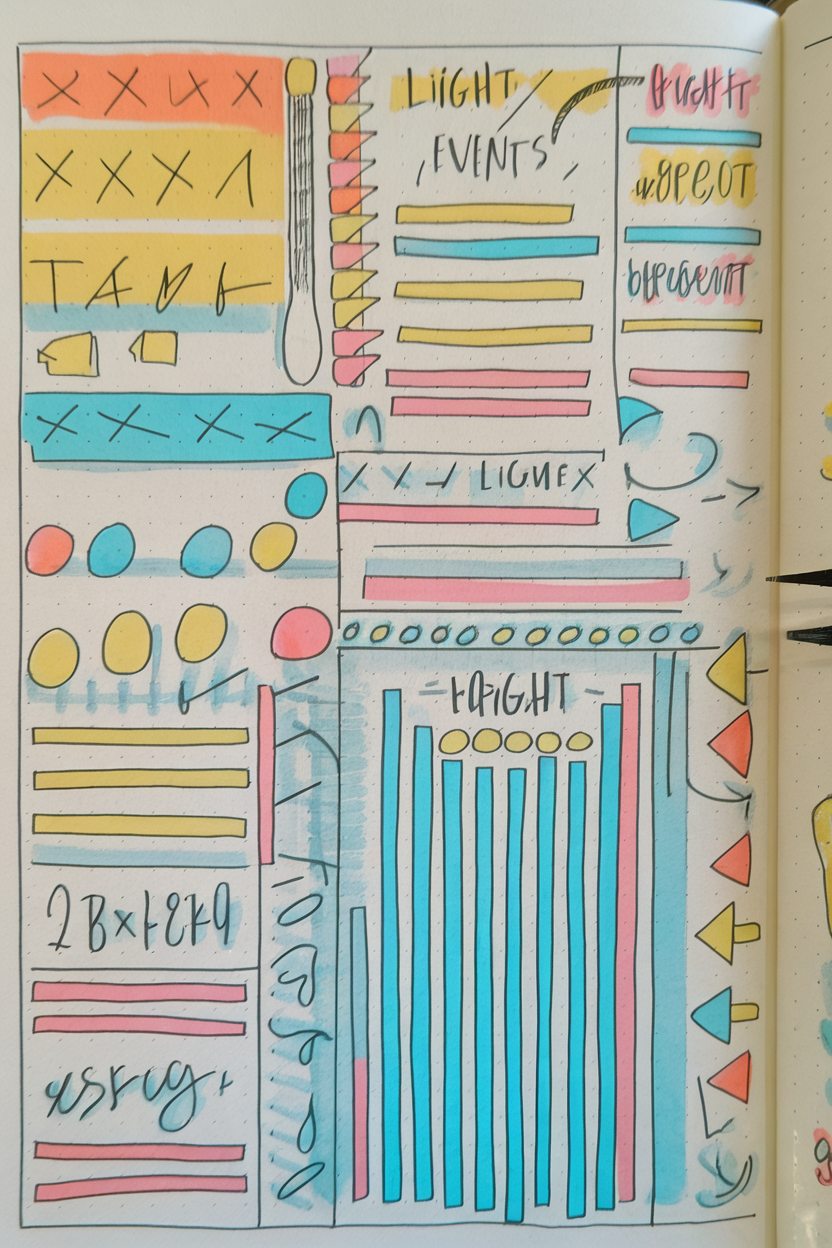
Symbols are a core part of any bullet journal system, and I find that using a consistent set helps me quickly scan my to-do lists. This visual language lets me understand my priorities without having to read every single line.
The official bullet journal method uses a simple set of symbols. A dot (•) is for tasks, an open circle (o) is for events, and a dash (–) is for notes.
For tasks, I use additional signifiers to track their status. An X means completed, a right arrow (>) shows I’ve moved it to another day, and a left arrow (<) shows I’ve scheduled it for the future.
Custom symbols can be very helpful for your specific needs. I use stars for high-priority items, exclamation points for deadlines, and hearts for self-care tasks. The goal is to create a language that makes sense to you.
I always include a key in my journal to remember what each symbol means. This becomes especially important when I create specialized symbols for different areas of my life.
The beauty of these symbols is that they work at a glance. I can immediately spot incomplete tasks or important events when I flip through my journal.
Structure Your Time with Logs and Overviews
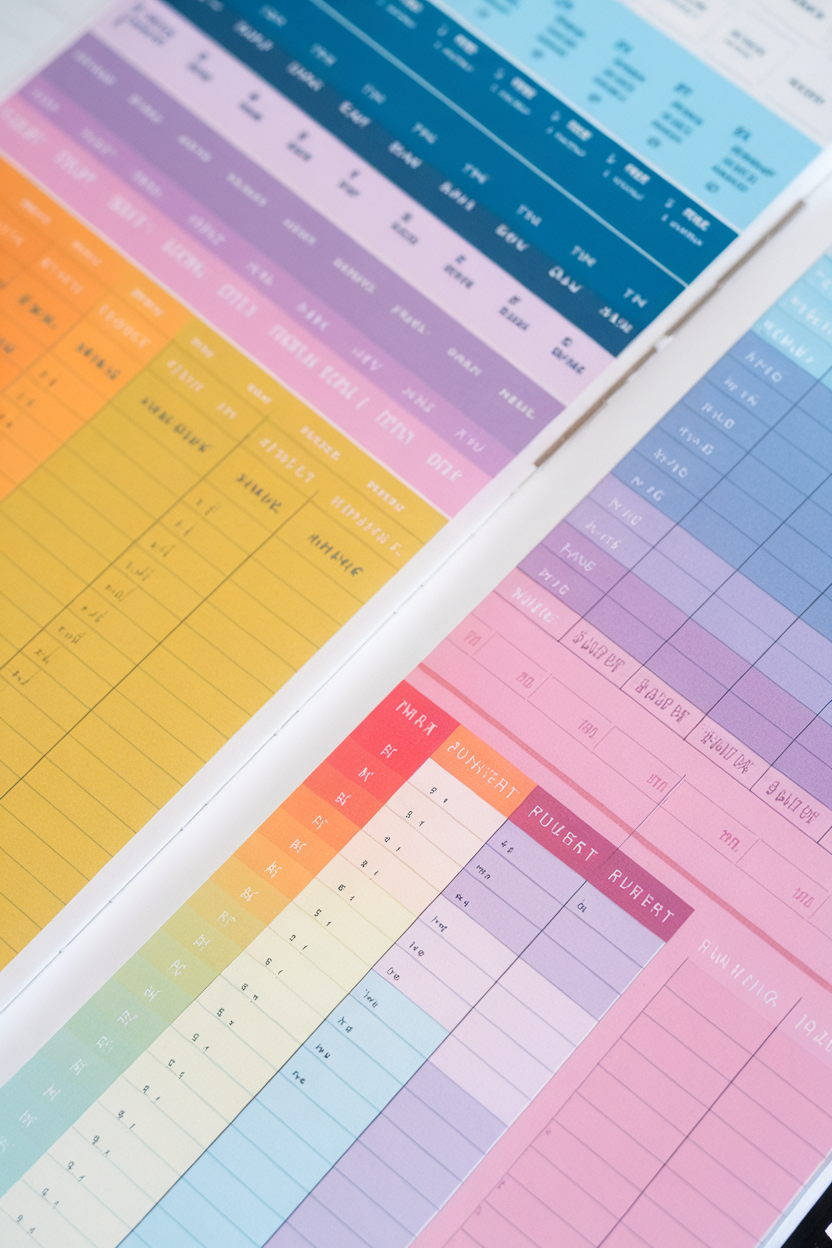
Effective planning involves looking at your time from different perspectives, from the long-term view to your daily actions. Your bullet journal handles this with a system of logs and overviews.
A Future Log is where you record events, tasks, and goals that happen beyond the current month. I create my Future Log by dividing several pages into sections for upcoming months, ensuring I don’t forget important events that are weeks away.
Next, Monthly Overviews are essential for keeping track of my big-picture tasks. On one page, I create a vertical calendar to track appointments and deadlines. On the opposite page, I list my monthly tasks and goals without specific dates.
Finally, Daily Logs are the heart of your task management. I create them either the night before or first thing in the morning, writing the date and listing my top priorities for the day.
This process of daily logging provides more detailed records than weekly spreads. I appreciate having this incremental record when looking back on my progress.
Practice Mindful Migration and Weekly Reviews

One of the most powerful features of bullet journaling is the migration process, best done during a weekly review. This is a quiet self-care ritual that keeps my to-do lists relevant and on track.
The migration of unfinished tasks helps me be more mindful of what I’m carrying over. This extra step makes me pause and consider if the task is still worth my energy.
I dedicate about 30 minutes every Sunday to review what I accomplished. Reflection is key to understanding my productivity patterns and honoring my efforts, no matter how small.
During my review, I check unfinished tasks and use a right arrow symbol (>) for tasks that move forward. This visual indicator shows me which items I’ve pushed ahead, prompting me to reflect if it happens often.
Continual migration helps me identify patterns in what I consistently don’t complete. This awareness has been key to improving my productivity and setting more realistic expectations for myself.
Create a ‘Brain Dump’ for Mental Clarity

In my bullet journal, I always set aside dedicated space for a “brain dump.” This helps me capture random thoughts, meeting details, or important information that doesn’t fit neatly into my task lists.
Having a designated notes section keeps my journal organized and prevents inspiration from getting lost. It’s a wonderful self-care tool for clearing a busy mind and reducing mental clutter.
Quick notes can be vital when you’re managing multiple projects or responsibilities. For work, I might create a simple heading on a new page with the meeting name and date for easy reference.
I use symbols or icons to mark different types of notes, such as a lightbulb for ideas or a question mark for follow-ups. This visual system helps me quickly scan my notes and find what I need.
You can find many incredible ideas and examples for how to structure these pages creatively, but even a simple, messy list can bring immense relief.
Bridge the Gap: Sync Your BuJo with Digital Calendars

While a bullet journal is great for mindful organization, syncing it with digital calendars makes your system even more powerful. Merging digital with analog helps me keep track of everything without duplicating effort.
I reserve my digital calendar, like Google Calendar, for fixed appointments, deadlines, and collaborative events. Meanwhile, my bullet journal handles my daily tasks, notes, and flexible to-dos that require more reflection.
Consistency is key when using both systems. I review my bullet journal and digital calendar each morning to ensure nothing falls through the cracks.
One effective method I use is creating simple calendar blocks in my bullet journal’s monthly log to mark days with important events. I then add the specific details to my digital calendar.
This hybrid approach gives me the reliability of digital alerts with the mindful engagement of my paper journal.
Build Healthy Habits with a Visual Habit Tracker
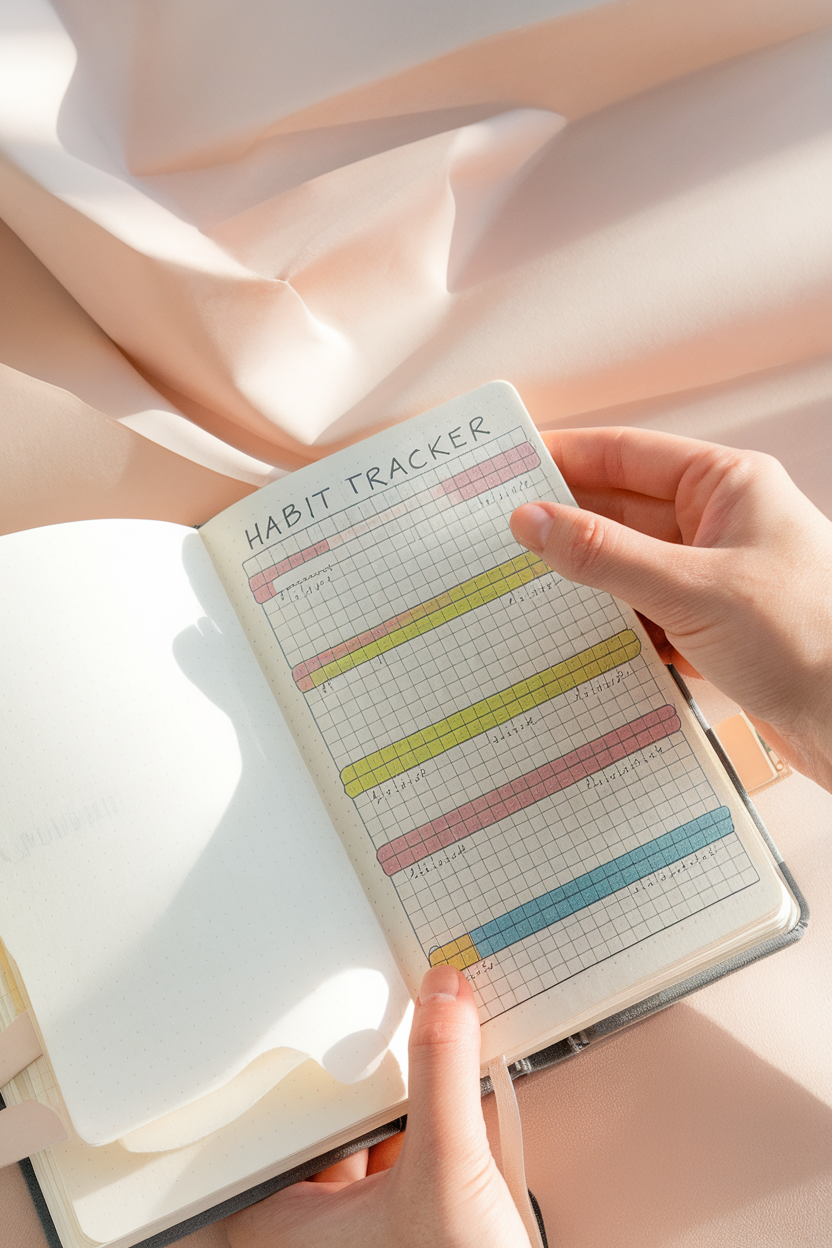
A habit tracker is one of the most useful wellness tools in my bullet journal. I tie my daily tracking to long-term goals I’ve set for myself to stay accountable.
Setting up a habit tracker is simple. I make a list of habits I want to cultivate and create a grid with dates along the top and habits down the side.
Each day, I get the satisfaction of coloring in the box for each habit I’ve completed. Visual tracking creates motivation as I see my progress build over time.
There are multiple tracker styles to choose from, like weekly circles or monthly grids. I choose whatever layout feels least like a chore and most like a reward.
I’ve learned to start small, tracking just three to five habits at a time. Trying to change too much at once can feel overwhelming and lead to abandoning the practice altogether.
Checking my habit tracker each morning reminds me of my wellness commitments and sets a positive tone for the day.
Plan Healthy Meals in Your Bullet Journal

Adding a meal planner to my bullet journal has made a huge difference in my wellness routine. I find that planning meals ahead reduces decision fatigue and helps me make healthier food choices.
A simple meal planning spread can include boxes for each day of the week with space for breakfast, lunch, and dinner. I like to include a small section for grocery items, which creates an instant shopping list.
You can find many practical meal planning layouts to adapt for your own journal. Two-page spreads also work well for comprehensive planning.
On one page, I list ingredients that need to be used before they expire. On the opposite page, I brainstorm meal ideas using those ingredients.
I also track favorite recipes and family meal successes in a dedicated collection. This creates a personal cookbook of tested and approved meals that makes future planning even easier.
Take Control with a Custom Budget Tracker

Adding a budget tracker to your bullet journal can help you mindfully manage your finances. Visual trackers make it easier to see spending patterns and stay within my budget.
To start, gather colored pens or highlighters to categorize expenses. I recommend using one page for your overall finances to list important accounts and savings goals.
You can create a simple monthly layout with columns for income, expenses, and savings goals. Many people find success by sketching their design first in pencil before committing to pen.
Track specific spending categories like groceries, entertainment, and utilities. I like to color-code these sections to quickly identify where my money is going each month.
Consider adding a visual tracker like a bar graph or a savings jar to draw. This makes the process more engaging and helps me stay motivated toward my financial wellness goals.
Personalize Your Pages for Joy and Motivation
Adding personal touches can turn your bullet journal from a simple to-do list into a source of daily joy. Quotes and simple decorations work as little reminders of your goals and values.
I select quotes that resonate with my current challenges or aspirations. You can add them to weekly spreads, monthly covers, or dedicated quote pages. Using different lettering styles or simple doodles makes them visually appealing.
Washi tape is another bullet journal superstar. It’s colorful, removable, and incredibly versatile for decorating your to-do lists without requiring artistic skill.
You can create borders around your to-do lists to make them stand out. I often place a strip of tape across the top of my to-do list page to create a clean header.
You can also use washi tape to mark important tasks by cutting small flags next to priority items. This is a simple, visual way to highlight what I must complete that day.
These small, creative acts infuse your pages with personality and make the process of organizing your life more enjoyable.
Embrace the Core Principle of Flexibility

As you begin, remember that your bullet journal is a personal space that should work for you, not the other way around. The core of the system lies in its flexibility and a few key practices that turn a simple notebook into a powerful organizational tool.
The physical act of writing down tasks makes you more committed to completing them. This is not about perfection; it’s about creating a living document that adapts to your changing life.
There is no right or wrong way to use your bullet journal. The most effective system is the one you will actually use consistently.
Feel free to experiment with different layouts, symbols, and collections. The goal is to build a practice that feels like attainable self-care and brings a sense of calm and control to your daily life.