
Red Light Therapy for Fibromyalgia (Maximum Symptom Reduction)
Red Light Therapy for Fibromyalgia: A Gentle Path to Relief
Living with fibromyalgia, a chronic pain condition, affects millions of people around the world. It can cause widespread pain, fatigue, and many other challenging symptoms.
While there is no cure, new options are bringing hope. Natural treatments like red light therapy are showing real promise for managing symptoms and improving day-to-day life for those affected.
To get the most symptom relief, you can use a strong handheld device on different pain points. For even broader benefits, you might add a panel for full-body support to reduce system-wide inflammation.
In this article, we’ll explore the benefits of red light therapy for fibromyalgia. You’ll discover how this gentle approach offers a new path for those navigating this complex disorder.
What Exactly Is Red Light Therapy for Fibromyalgia?
Red light therapy uses specific wavelengths of red and near-infrared light to support healing and wellness. It works by reducing inflammation, easing pain signals, and improving circulation, all of which can help with fibromyalgia symptoms.
While we call it “red” light therapy, the treatment actually uses wavelengths from both visible red and invisible near-infrared light.

This therapy has several names, including LED Light Therapy, Infrared Therapy, and, in scientific circles, Photobiomodulation. No matter the name, the way it works is the same.
It has been effective in reducing pain from neuropathy, arthritis, and soft tissue injuries. This therapy is a safe, powerful, and accessible option you can use at home without a prescription.
Unlike UV rays or intense heat, red light therapy uses a gentle light that goes into the skin and deeper tissues without causing any harm.
How Does Red Light Therapy Heal Your Body?
Red light therapy works by interacting with our cells, especially the mitochondria. You can think of these as the “powerhouses” of your cells.
Red and near-infrared light stimulates these mitochondria to produce more ATP (adenosine triphosphate). This process boosts cellular energy, which your body uses for repair and healing.

Red light therapy stimulates the production of ATP, which the body uses to repair and restore.
The light is absorbed by the mitochondria, where it kickstarts and speeds up this important energy-making cycle.

Light is absorbed in the mitochondria, where it speeds the production of ATP.
Besides boosting energy, the therapy also dials down pain signals by blocking the COX-2 enzyme, much like how NSAIDs such as ibuprofen work. For deeper healing, it creates nitric oxide, which opens up blood vessels. This improves circulation to help repair tissue.
It’s helpful to know that different wavelengths reach different depths. Red light (around 660nm) is great for skin and surface tissues, while near-infrared light (around 850nm) goes deeper to help muscles and joints.
What Are the Other Wellness Benefits?
I’ve seen firsthand how this boost in cellular energy can lead to big improvements in overall well-being. As a member of pain relief support groups, I have met many people who have found life-improving relief with this therapy.
Many users report feeling more energized after consistent LED light treatments. It’s not a sudden jolt like caffeine, but a gentle, steady increase in vitality that builds over time.
One of the most exciting parts of red light therapy for fibromyalgia is its ability to reduce inflammation. Chronic inflammation is a root cause of many health issues, and this therapy offers a drug-free way to manage it, as shown in studies.
The benefits aren’t just for pain and energy. Research suggests RLT may also boost collagen, help wounds heal, and even support hair regrowth, making it a popular choice for facial skin care.
My Personal Journey with Light Therapy
I’ve experienced major pain reduction in my lower back and arthritic knee. I combined my LED sessions with a routine of physical therapy, which included strengthening, stretching, and other therapies.
I was eight years into dealing with a deteriorating knee when I found out how to use red light therapy at home. This therapy, along with my other efforts, took my knee recovery from 70% to 95%. I am no longer in pain unless I overdo it.
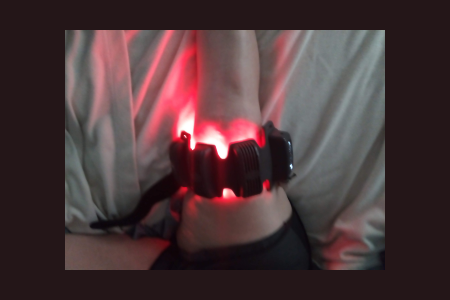
I used a Flexbeam on my arthritic knee.
For example, a few weeks ago, I felt too confident and tried the leg press machine against my physical therapist’s advice. My knee immediately swelled up in protest. I used light and ice therapy to calm it down and have avoided that machine ever since.
What Research Shows About Light Therapy for Fibromyalgia
Recent research highlights the potential of LED light therapy as a gentle treatment for fibromyalgia. Several studies have shown promising results, encouraging more research into this non-invasive approach.
A 2023 Study on Light and Magnetic Fields
A 2023 study[1] involved 90 women with fibromyalgia. One group received a mix of photobiomodulation (red light therapy) and a static magnetic field, while the other group got a placebo. The treatment used 905 nm, 850 nm, and 630 nm light over nine sessions.
Subjects experienced a 53% decrease in pain.
The treatment group’s average pain level dropped from 80.64 (out of 100) to 37.80 after treatment. Four weeks later, their pain was even lower at 34.47, a total 57% reduction from their starting point.
A 2002 Study on Laser Therapy for Fibromyalgia
An earlier 2002 study[2] looked at low-level laser therapy in 75 people. Participants received either active laser treatment, a placebo, or medication. After two weeks of daily laser treatments, the active group saw a big change.
Subjects experienced a 59.2% decrease in pain severity following the low-level laser therapy intervention.
Their average pain score fell from 3.04 (out of 4) to 1.24. This impressive reduction shows how light therapy can be an effective tool for pain management in fibromyalgia.
A 2006 Study on Long-Term Laser Therapy
In a 2006 study[3], researchers studied the long-term effects of low-level laser therapy on 32 women with fibromyalgia. The treatment group received infrared light on tender points, while the control group got a placebo.
The treatment group showed lasting benefits. After six months, they had 8.6% fewer tender points, 14.7% less morning stiffness, and a 10.2% better score for symptom severity compared to their starting point.
The results, checked right after treatment and again at a six-month follow-up, showed clear improvements in pain, stiffness, and overall quality of life for the therapy group compared to the placebo group.
| Measure | Group | Pre-treatment | Post-treatment (% change) | Month 6 (% change) |
|---|---|---|---|---|
| Tender point count | Red Light Therapy | 13.68 | 11.81 (-13.7%) | 12.50 (-8.6%) |
| Placebo | 13.94 | 12.88 (-7.6%) | 13.95 (+0.1%) | |
| Morning stiffness | Red Light Therapy | 3.00 | 2.38 (-20.7%) | 2.56 (-14.7%) |
| Placebo | 3.06 | 2.50 (-18.3%) | 3.25 (+6.2%) | |
| Fibromyalgia Impact Questionnaire | Red Light Therapy | 65.50 | 58.50 (-10.7%) | 62.02 (-5.3%) |
| Placebo | 65.38 | 63.63 (-2.7%) | 66.94 (+2.4%) | |
| Total myalgia score | Red Light Therapy | 25.00 | 19.50 (-22.0%) | 22.44 (-10.2%) |
| Placebo | 27.56 | 26.00 (-5.7%) | 28.75 (+4.3%) |
References
- Ribeiro NF, Leal-Junior ECP, Johnson DS, Demchak T, Machado CM, Dias LB, DE Oliveira MF, Lino MM, Rodrigues WD, Santo J, DE Barros CN, Casalechi HL, Tomazoni SS. Photobiomodulation therapy combined with static magnetic field is better than placebo in patients with fibromyalgia: a randomized placebo-controlled trial. Eur J Phys Rehabil Med. 2023 Dec;59(6):754-762. doi: 10.23736/S1973-9087.23.07928-5. Epub 2023 Oct 17. PMID: 37847246; PMCID: PMC10792673.
- Gür A, Karakoc M, Nas K, Cevik R, Sarac J, Ataoglu S. Effects of low power laser and low dose amitriptyline therapy on clinical symptoms and quality of life in fibromyalgia: a single-blind, placebo-controlled trial. Rheumatol Int. 2002 Sep;22(5):188-93. doi: 10.1007/s00296-002-0221-z. Epub 2002 Jul 6. PMID: 12215864.
- Armagan, O, Tascioglu F, Ekim A, Oner C. Long-term efficacy of low level laser therapy in women with fibromyalgia: A placebo-controlled study. Journal of Back and Musculoskeletal Rehabilitation, vol. 19, no. 4, pp. 135-140, Dec. 2006. doi: 10.3233/BMR-2006-19405
How Light Therapy Tackles Inflammation and Fatigue
Red light therapy helps calm the body’s inflammatory response. It encourages the production of anti-inflammatory agents while reducing pro-inflammatory ones, which is a key reason it helps people with fibromyalgia.
The light also improves circulation and helps form new blood vessels. This better blood flow brings more oxygen and nutrients to sore tissues, helping to ease muscle pain and fatigue.
One of the most exciting discoveries is its effect on mitochondrial function. Recent research suggests a link between fibromyalgia and problems with mitochondria, which could be a source of the condition’s signature fatigue and pain.
Red light therapy helps your cells produce more ATP, an energy molecule. Restoring this cellular energy may address one of the deepest causes of fibromyalgia.
How Does Light Therapy Compare to Other Treatments?
Unlike common medications such as pregabalin or duloxetine, studies show red light therapy does not have major side effects. This makes it a great choice, especially for people who are sensitive to medications.
The main trade-off is that light therapy requires patience. While some people feel relief after the first session, it can take a few weeks of daily use to notice consistent results.
Compared to exercise, light therapy is less physically demanding, which can make it easier to stick with. However, the two work well together; exercise offers unique benefits that light cannot replace.
Additionally, red light therapy is known to help with trouble sleeping and mood issues, which often accompany fibromyalgia.
How to Use Red Light Therapy at Home for Fibromyalgia
You can approach red light therapy for inflammatory pain in two ways: use full-body light exposure for system-wide relief or apply focused light for specific pain points.
For this, you would use a panel for systemic relief and a handheld device or belt for targeted relief. If you’re starting with just one, I would suggest a targeted device you can press right onto the skin over tender spots. This helps your body absorb the most light.
Most quality devices use both red light (630-660 nm) and near-infrared light (810-850 nm). Research supports these wavelengths for effectively managing fibromyalgia symptoms.
For a combined approach, you could use a panel on your full body daily while also using a targeted device on your most painful areas. Or, you could switch between the two types of devices on different days.
Remember to follow the recommended session times, as too much treatment can be less effective. Also, be aware of any reasons you shouldn’t use it, such as taking photosensitive medications, which you can learn about here.
Choosing the Right Device: Panels, Handhelds, and Belts
A red light therapy panel covers a large area of your body with light from a distance. New research shows that the mitochondria in our blood can absorb this light. As the blood circulates, it carries these healing benefits to your entire body and brain.

This is why it’s called “systemic” treatment. While this approach is thorough, it may take four to six weeks to feel consistent pain relief. Look for panels from trusted brands like Mito Red Light or Lightpath LED.
A handheld device delivers a powerful dose of light to a specific spot for more immediate, focused results. Based on stories from pain support groups, a strong handheld device like a laser often works faster for fibromyalgia pain points than a panel.

A belt or pad gives you flexibility by wrapping around a body part for hands-free treatment. Some, like the Recharge FlexBeam, are made of durable materials and offer more powerful therapy. Softer neoprene belts also work well, though they may take a bit longer to show results.

The FlexBeam is a powerful, targeted red light therapy belt.
Real Stories of Hope and Healing
I often collect red light therapy stories from social media, friends, and family. These personal accounts offer a powerful look into the therapy’s real-world effects.
A common theme is a gradual but clear reduction in pain. For example, a 45-year-old woman said that after six weeks of consistent use, her daily pain average dropped from an 8/10 to a 5/10. This allowed her to reduce her pain medication and exercise more, leading to even more pain relief.
Many users also notice big improvements in sleep quality. One 52-year-old man shared that he went from waking up multiple times a night to often sleeping soundly. He felt more refreshed in the morning, which in turn helped with his daytime fatigue and mood.
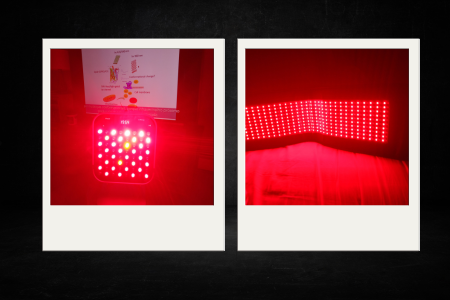
Combining a panel and a belt allows for both systemic and targeted treatment.
More energy and less fatigue are also frequent benefits. Some users report better focus, describing it as lifting the “fibro fog.” A 60-year-old retiree shared that she could enjoy hobbies like reading and crosswords again, which she had stopped due to trouble concentrating.
It’s important to remember that consistency and patience are crucial. One person said, “I didn’t notice much change in the first two weeks, but by week four, the improvements were undeniable. Sticking with it was key.” While these stories are encouraging, results can vary. However, for those who benefit, the impact can be truly significant.
Final Thoughts: A Natural Path to Fibromyalgia Relief
Red light therapy for fibromyalgia is a promising and natural way to reduce inflammation and ease pain. It is a proven method for addressing pain in conditions like neuropathy, arthritis, and soft tissue injuries.
By targeting the root causes of fibromyalgia, like inflammation and mitochondrial issues, it offers a safe way to manage pain, improve sleep, boost energy, and feel better overall. It is safe, powerful, and you can use it at home without a prescription.
While specific studies on its use for fibromyalgia are positive, they need more confirmation, as noted in a recent systematic review. As research continues to unfold, this gentle therapy is providing new hope for those seeking a natural way to manage their symptoms and take back their lives.
Further Reading
- Photobiomodulation as Treatment for Fibromyalgia
- Effects of low power laser and low dose amitriptyline therapy on clinical symptoms and quality of life in fibromyalgia (PubMed)
- Red Light Therapy For Fibromyalgia: Does It Really Help Alleviate Symptoms?
- Blue light treatment reduces spontaneous and evoked pain in mouse models of fibromyalgia-like pain
- Pilot Study Finds Green Light Therapy Improves Fibromyalgia Symptoms