
Beyond the Glow: Understanding Red Light Therapy’s Critical Specifications
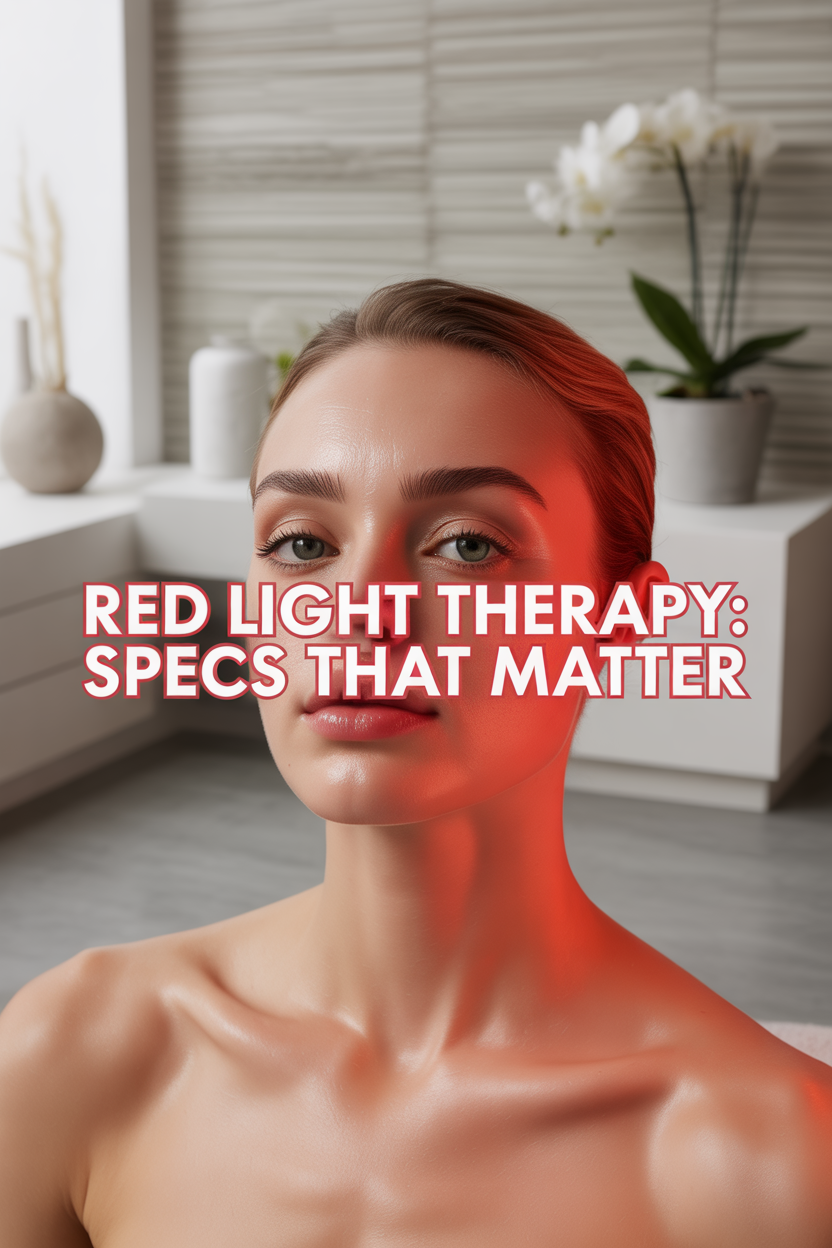
What is Red Light Therapy and How Does It Work?

Oh, hello there, fellow light enthusiast! 😊 Let’s dive into the wonderful world of red light therapy—a treatment that’s been lighting up the wellness scene. As more people jump on the glowing bandwagon, knowing what’s actually under the hood of these devices becomes incredibly important.
Red light therapy (RLT)—also known by the fancy term photobiomodulation or low-level light therapy (LLLT)—uses specific wavelengths of red and near-infrared light that penetrate your skin. Unlike the sun’s harsh rays, red light doesn’t damage your skin. Instead, it’s like giving your cells a friendly and revitalizing energy boost!
Think of it as human photosynthesis. Your cells absorb this light energy and convert it into cellular energy, much like how plants use sunlight. This process can lead to benefits like reduced inflammation, better circulation, and speedier tissue repair.
At the heart of the action are your mitochondria—the tiny powerhouses of your cells. When red and near-infrared wavelengths penetrate your tissues, they’re absorbed by an enzyme called cytochrome c oxidase.
This absorption kicks off several key biochemical reactions. It boosts the production of ATP, which is the energy currency of your cells, giving them more fuel to perform their functions.
It also promotes the release of nitric oxide. This important molecule helps improve blood flow and tells inflammation to take a hike.
Finally, this process activates transcription factors that regulate genes related to cell survival and renewal. This explains why red light therapy can help with everything from fighting wrinkles to easing stubborn knee pain. It’s not magic—it’s science! ✨
Which Wavelengths Are Best for Red Light Therapy?

Not all red light is created equal. The wavelength—measured in nanometers (nm)—determines how deep the light can penetrate your body and which cellular responses it triggers. Think of it as the difference between a shallow dive and a deep-sea exploration!
While specific ranges are most studied, some experts consider the effective ranges to be broader, from 620-700nm for red light and 700-1000nm for near-infrared. Many top-notch devices combine both for a full spectrum of benefits.
When shopping, look for specific wavelength numbers rather than vague “red light” claims. Specificity is key to ensuring you get an effective device.
Red Light: 630-660 nm (The Skin’s Best Friend)
This wavelength range is perfect for skin-level treatments, penetrating about 8-10mm. It primarily affects skin cells, promoting collagen production and healing surface-level tissues.
Red light is the MVP for addressing skin conditions, accelerating wound healing, and reducing surface inflammation. It’s your go-to for achieving that “just back from vacation” glow!
Near-Infrared Light: 810-850 nm (The Deep Tissue Detective)
Near-infrared (NIR) light goes much deeper, reaching up to 5cm into your body. This allows it to target muscles, bones, and joints with healing energy.
It is the ideal choice for deeper pain relief and muscle recovery, making it a post-workout secret weapon. If your sore joints could talk, they’d be asking for NIR light.
What Is Power Density (Irradiance) and Why Does It Matter?

Power density, also known as irradiance, is a crucial specification. Measured in milliwatts per square centimeter (mW/cm²), it tells you how much energy your RLT device delivers to your tissue.
Think of it as the difference between a gentle sprinkle and a powerful waterfall. Both are water, but one has significantly more force and impact.
For effective therapy, you’re typically aiming for a power density between 10-100 mW/cm² for most conditions. This range is considered the “Goldilocks zone” for therapeutic benefits.
Many experts consider 20-60 mW/cm² to be the sweet spot for at-home applications. If you see a device advertising 30-50 mW/cm², you know it’s balanced for effective home use.
Too little power and you might as well be using a regular light bulb. Conversely, too much power could cause tissue heating or even reverse the benefits through a process called photoinhibition.
Always check the power density at the recommended treatment distance, because just like a crush, its intensity changes significantly with distance. 📏
How Do You Find Your Ideal Treatment Dose?

The total energy delivered during a session is measured in joules (J). This is a critical factor for effectiveness and is calculated by looking at power, area, and time.
The basic formula is: Joules = Power Density (W/cm²) × Treatment Area (cm²) × Time (seconds). Don’t worry, there won’t be a quiz!
Effective treatments typically deliver between 4-60 joules/cm², depending on the condition. Lower doses are great for surface issues, while deeper problems need higher doses.
Treatment duration varies depending on your device’s power, as outlined in most dosage guides. A high-power device might only require 3-10 minutes per session.
A medium-power device may need 10-20 minutes, which is just enough time to listen to a favorite podcast. Low-power devices can take 20-30 minutes or more.
Thankfully, quality devices will tell you exactly how long to stand there basking in the glow. This takes the guesswork out of your hands so you can focus on healing.
How Much Coverage Area Do You Really Need?

The coverage area determines how much of your body gets the light love at once. Are you looking for a spotlight for a specific area or a floodlight for your whole body?
Coverage specifications include the physical dimensions of the device and the beam angle of the LEDs, which is typically between 30-60 degrees. You also want to look for uniformity of coverage to ensure the light is evenly distributed.
Smaller, handheld devices might cover just 5-10 square inches. These are perfect for targeted treatments on your face or a single bothersome joint.
Larger panel systems can range from medium (1-2 square feet) to extra-large (4+ square feet). These are designed for treating broader areas or even your entire body at once.
Consider your wellness goals carefully. If you’re targeting crow’s feet, a small device is likely sufficient. However, for full-body wellness benefits, you’ll need a much larger panel.
Should You Choose Pulsed or Continuous Wave Light?

Red light therapy can be delivered in two ways: a steady, continuous wave or in rapid pulses. Think of it as the difference between a regular lamp and a strobe light.
Continuous Wave (CW) therapy delivers an uninterrupted stream of light. This is the most common mode in consumer devices because it’s simple, reliable, and effective for most general wellness applications.
Pulsed Wave therapy delivers light in on-off cycles, measured in Hertz (Hz). Pulse rates can range widely, and some research suggests that certain frequencies may enhance effects for specific conditions, like pain or inflammation.
For example, lower frequencies of 1-10 Hz are often used for pain relief, while higher frequencies may be used to improve circulation. This feature is typically found in more premium systems.
While some studies suggest pulsed light has advantages, many benefits also come from continuous delivery. High-end devices often let you choose, giving you the best of both worlds!
What About EMFs and Electrical Safety?

Electromagnetic Field (EMF) emissions are a valid consideration when choosing a light therapy device. While light itself is electromagnetic energy, “EMF” in this context refers to unwanted radiation from internal electrical components.
A key specification to look for is the EMF measurement at the standard usage distance. This should ideally be under 2 milligauss (mG) to be considered low.
Quality devices use features like shielded wiring and internal components to minimize these emissions. Some premium devices even boast special EMF-reducing technologies.
When comparing products, look for devices that have been tested to meet IEEE standards and have specific EMF testing data available. Vague “low EMF” claims are not as reassuring as transparent, third-party verified numbers. ⚡
Lifespan and Durability: Does Your Device Have Staying Power?

Good heat management and durable construction are crucial for safety, longevity, and effectiveness. You want a device that is built to last.
Cooling systems are essential for maintaining consistent light output and preventing the device from overheating. These can range from passive heat sinks in basic models to quiet, built-in fans in higher-end systems. Effective heat management ensures a longer device lifespan.
The expected operational lifespan of the LEDs is another critical spec. Quality LEDs should be rated for 30,000-50,000+ hours, which translates to decades of daily use!
Also, look for information on light output degradation. A good device should maintain at least 80% of its initial brightness even after thousands of hours of use.
Finally, check the housing materials. Aircraft-grade aluminum and other durable materials are preferable to cheap plastic that can crack easily. Investing in durability often means a lower cost per treatment over time.
Professional vs. At-Home Devices: Is It Worth the Upgrade?

Professional and consumer-grade devices differ significantly, much like a professional spa treatment versus a DIY facial at home.
Professional devices, found in clinics, boast higher power density, often 50-150 mW/cm² or more. They feature precise wavelength control, advanced pulsing options, and are built to run all day long. This performance comes with a hefty price tag, often thousands of dollars.
At-home devices offer a more practical choice for most people. They have a moderate power density, typically 20-80 mW/cm², with simplified controls for user-friendliness and safety.
These devices are more compact and designed for shorter daily use sessions. Their price is also much more accessible, ranging from a few hundred to a few thousand dollars.
Many high-quality home devices now offer specs that approach professional-grade equipment. For most of us, a premium home device provides excellent benefits without requiring a second mortgage! 💰
What Safety Certifications Should You Look For?

A quality device should comply with all relevant safety and manufacturing standards. This is your assurance that the product is safe and effective.
Look for FDA classification. A device cleared as a Class II medical device has been reviewed by the FDA for specific medical claims. General wellness devices may simply be registered with the FDA.
Important safety certifications include UL, ETL, or CE markings. These indicate that the product has been tested by a third party for electrical safety.
RoHS certification is another good sign, as it means the device is free from certain hazardous materials. On the manufacturing side, look for ISO 13485 or GMP compliance, which shows a commitment to quality control.
Be wary of devices making specific medical claims without the proper FDA clearance. Reputable manufacturers will always be transparent about their certifications and testing. 📜
Device Lifespan: Long-Term Value

The expected operational lifespan is a critical specification when evaluating your investment. Look for:
- LED lifespan: Quality LEDs should last 30,000-50,000+ hours
- Light output degradation: Should maintain at least 80% brightness after 10,000 hours
- Housing materials: Aircraft-grade aluminum or similarly durable materials
- Operating duty cycle: How long it can run continuously without overheating
- Basic devices: 20-30 minutes
- Mid-range: 1-3 hours
- Professional: 8+ hours
- IP rating: Dust/water resistance
- Impact resistance: Durability against accidental damage
Quality devices provide these specifications in their documentation. Investing in durability often translates to lower cost per treatment over the device’s lifetime.
Warranty and Customer Support: Confidence Indicators

Warranty terms often reveal how much a manufacturer trusts their own product. Look for:
- Warranty duration: Industry standards range from:
- 1 year (basic consumer devices)
- 2-3 years (premium consumer devices)
- 3-5+ years (professional-grade equipment)
- Coverage details:
- Comprehensive coverage (parts and labor)
- Limited coverage (specific components only)
- Prorated coverage (diminishing over time)
- Performance guarantees: Some premium brands guarantee minimum light output over time
- Satisfaction guarantees: Trial periods to test effectiveness
Beyond warranties, look for transparency in specifications, third-party testing verification, and responsive customer support. Companies that openly share detailed technical data typically stand behind their products with confidence.
Finding Your Perfect Red Light Therapy Device

When shopping for devices, prioritize specifications based on your specific goals:
For skin concerns:
- Focus on 630-660nm wavelengths
- Power density of 20-50 mW/cm² is sufficient
- Coverage area matching treatment regions (face, hands, etc.)
- Look for proven collagen-stimulating capabilities
For muscle recovery and joint pain:
- Prioritize 810-850nm wavelengths for deeper penetration
- Higher power density (50-100 mW/cm²) for deeper tissue effect
- Larger treatment area for joints or muscle groups
- Consider pulsing capabilities for enhanced pain relief
For comprehensive wellness:
- Devices with both red and near-infrared wavelengths
- Balanced power density (30-60 mW/cm²) for overall effectiveness
- Coverage suitable for full-body treatment
- Consider modular systems that can expand with your needs
Create a comparison worksheet with your priority specifications when evaluating options. Remember that the most expensive device isn’t always the best—the ideal device delivers the specific wavelengths, power, and coverage you need for your unique wellness goals.
With this knowledge of red light therapy specifications, you can now confidently navigate the world of light therapy devices. Choose wisely, and enjoy the many potential benefits this innovative therapy has to offer.
LED vs. Laser: The Great Light Showdown
Red light therapy devices use either Light Emitting Diodes (LEDs) or Low-Level Lasers (LLLs). They are about as similar as cats and dogs—both are great, but they serve different purposes.
LED devices emit non-coherent light across a broader spectrum and cover larger areas with more diffuse light. They are generally more wallet-friendly, user-friendly, and boast a lower risk profile, with a power density usually between 10-100 mW/cm².
Laser devices, on the other hand, emit coherent, monochromatic light. They deliver concentrated energy to specific points with a higher power density, often 100-500 mW/cm² or more.
Due to their precision and power, lasers are usually found in professional clinical settings. They have a smaller treatment area but offer high precision for specific applications.
For most of us seeking wellness benefits at home, high-quality LED devices provide excellent results with better safety profiles and coverage. You can save the lasers for the professionals!
Ready to Choose? Your RLT Buyer’s Checklist
A manufacturer’s warranty often reveals how much they stand behind their product. Look for a warranty of at least 2-3 years for a premium consumer device.
Check the details to see if it provides comprehensive coverage for parts and labor. Some top brands even offer performance guarantees on light output over time or satisfaction guarantees that allow you to test the device risk-free.
When you’re ready to shop, prioritize specifications based on your personal goals. For skin concerns, focus on 630-660nm wavelengths and a moderate power density of 20-50 mW/cm².
For muscle recovery and joint pain, prioritize deeper-penetrating 810-850nm wavelengths and a higher power density of 50-100 mW/cm² for a stronger effect.
For comprehensive, full-body wellness, look for a large panel that offers both red and near-infrared wavelengths with a balanced power output.
Remember that the priciest device isn’t always the best for your needs. The perfect device delivers the specific wavelengths, power, and coverage YOU need to achieve your wellness goals. Finding the right fit matters more than the brand name!