
7 Game-Changing Red Light Therapy Devices for Knee Pain (Expert Guide)

The Best Red Light Therapy for Knee Pain

Are you struggling with knee pain? Finding it difficult to climb stairs or even walk comfortably? Red light therapy might be the solution you’ve been searching for. This revolutionary treatment offers a drug-free approach to managing knee pain. In this comprehensive guide, we’ll explore the science behind red light therapy, review the most effective devices, and show you how to use this technology to reduce your knee pain and improve mobility.
What is Red Light Therapy and How Does it Work for Knee Pain?
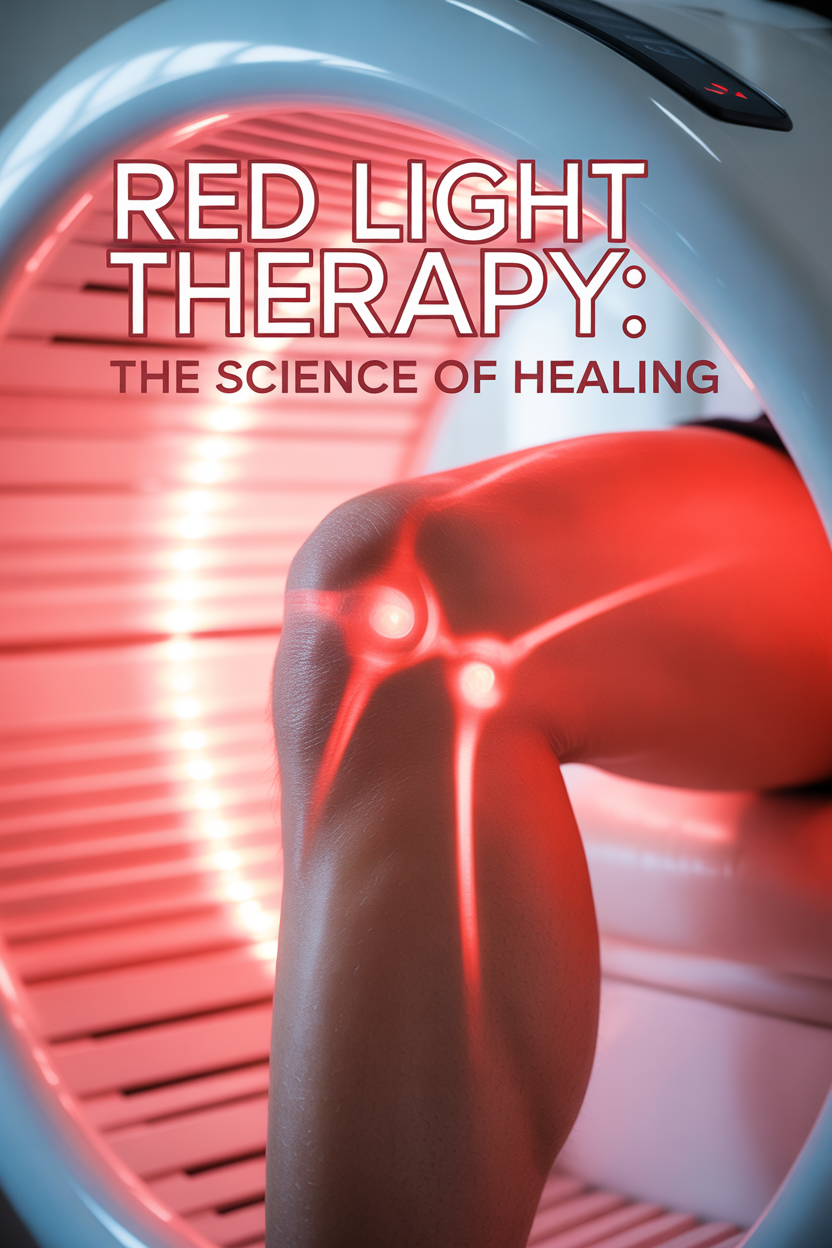
Red light therapy (RLT), also known as low-level laser therapy or photobiomodulation, uses specific wavelengths of red and near-infrared light to penetrate your skin and reach deeper tissues where knee pain originates.
These light waves stimulate your cells’ mitochondria, which boosts energy production in the form of ATP. This cellular energy surge powers your body’s natural healing mechanisms. The result is reduced inflammation, accelerated healing, and improved blood circulation to painful knee areas.
The Science Behind Red Light Therapy for Joint Pain Relief

Red light therapy works through multiple mechanisms: reducing oxidative stress, decreasing inflammation, enhancing collagen production, and improving circulation. This comprehensive approach addresses knee pain at its source rather than just masking symptoms.
Here is a 7th-grade level summary for each of the eight studies:
- A 2025 study found that 30 sessions of 790 nm light resulted in significant reduction of knee pain and stiffness, while making it much easier for patients to move around and perform daily activities.
- A 2025 study found that 10 sessions of 808, 1064, and 1120 nm light resulted in significant reduction of pain and helped the knee joint work much better during physical movements.
- A 2023 study found that 12 sessions of 830 or 1064 nm light resulted in significant reduction of pain and allowed patients to bend their knees more easily.
- A 2022 study found that 10 sessions of 850 nm light resulted in significant reduction of long-term pain and improved blood flow in the knee area.
- A 2023 study found that 15 sessions of 904 nm light resulted in significant reduction of pain when being active, specifically making it easier for people to walk and climb stairs.
- A 1992 study found that 10 sessions of 633 and 830 nm light resulted in significant reduction of pain and disability for elderly people suffering from worn-down knee joints.
- A 2003 study found that 10 sessions of 904 nm light resulted in significant reduction of painful symptoms and generally made the patients’ daily lives much more comfortable.
- A 2009 study found that 8 sessions of 830 nm light resulted in significant reduction of swelling and pain, with the positive effects lasting for at least two months after the treatment ended.
| Journal | Study | Wavelength / Length / Frequency | Outcome |
|---|---|---|---|
| Lasers in Medical Science, 2025 | Effect Of Photobiomodulation (Low-Level Laser Therapy) In Patients With Knee Osteoarthritis | 790 nm / 10 weeks / 3 sessions per week (30 total) | Significant reductions in pain and improvements in WOMAC scores for pain, stiffness, and function. |
| La Clinica Terapeutica, 2025 | The effects of laser therapy on pain, functionality and biomechanical parameters in patients suffering from gonarthrosis | 808, 1064, 1120 nm / 3 weeks / 3 sessions per week (10 total) | Significant decrease in VAS pain scores and improvement in KOOS and WOMAC scores. |
| Lasers in Medical Science, 2023 | Comparison between Low-Level and High-Intensity Laser Therapy as an Adjunctive Treatment for Knee Osteoarthritis | 830 nm, 1064 nm / 12 weeks / 1 session per week (12 total) | Both groups showed improvements in pain (NPRS), function (KOOS), and flexion. |
| Photobiomodulation, Photomedicine, and Laser Surgery, 2022 | Customized Photobiomodulation Modulates Pain and Alters Thermography Pattern in Patients with Knee Osteoarthritis | 850 nm / 5 weeks / 2 sessions per week (10 total) | Pain scores reduced significantly and remained lower at 6-week follow-up; improved QOL and microcirculation. |
| Revista da Associação Médica Brasileira, 2023 | Effects of low-level laser therapy on acupuncture points on knee pain and function in knee osteoarthritis | 904 nm / 3 weeks / 5 sessions per week (15 total) | Statistically significant improvement in VAS activity scores and walking/stair climbing tests. |
| Journal of the American Geriatrics Society, 1992 | Improvement of pain and disability in elderly patients with degenerative osteoarthritis of the knee treated with narrow-band light therapy | 633 nm, 830 nm / 2 weeks / 5 sessions per week (10 total) | Effective in relieving pain and disability in elderly patients with degenerative knee OA. |
| Lasers in Surgery and Medicine, 2003 | Efficacy of different therapy regimes of low-power laser in painful osteoarthritis of the knee | 904 nm / 2 weeks / 5 sessions per week (10 total) | Significant improvements in pain, function, and quality of life compared to placebo. |
| Photomedicine and Laser Surgery, 2009 | The effect of low-level laser in knee osteoarthritis: a double-blind, randomized, placebo-controlled trial | 830 nm / 4 weeks / 2 sessions per week (8 total) | Significant improvement in pain, knee circumference, and flexion; effects lasted through 2-month follow-up. |
- WOMAC (Western Ontario and McMaster Universities Osteoarthritis Index): A widely used proprietary set of standardized questionnaires used by health professionals to evaluate the condition of patients with osteoarthritis of the knee and hip, including measurements of pain, stiffness, and physical function.
- KOOS (Knee Injury and Osteoarthritis Outcome Score): A questionnaire designed to assess the patient’s opinion about their knee and associated problems, covering five dimensions: pain, other symptoms, activities of daily living, sport and recreation function, and knee-related quality of life.
- VAS (Visual Analogue Scale): A measurement instrument that tries to measure a characteristic or attitude that is believed to range across a continuum of values and cannot easily be directly measured; in these studies, it is used by patients to self-report their level of pain on a scale (typically from 0 to 10 or 0 to 100).
Common Knee Conditions That Can Benefit from Red Light Therapy

Red light therapy can help with a wide range of knee problems:
- Osteoarthritis: Reduces inflammation and may help regenerate cartilage in this common “wear-and-tear” condition.
- Rheumatoid Arthritis: Helps calm immune system overreactions and reduces painful flare-ups.
- Tendonitis: Accelerates healing in inflamed tendons around the knee joint.
- Post-surgical recovery: Promotes faster healing and reduces pain after knee surgeries.
- Sports injuries: Supports faster recovery from common athletic knee injuries.
- Bursitis: Reduces inflammation in the fluid-filled sacs that cushion your knee joint.
Key Features to Look for in Red Light Therapy Devices for Knee Treatment
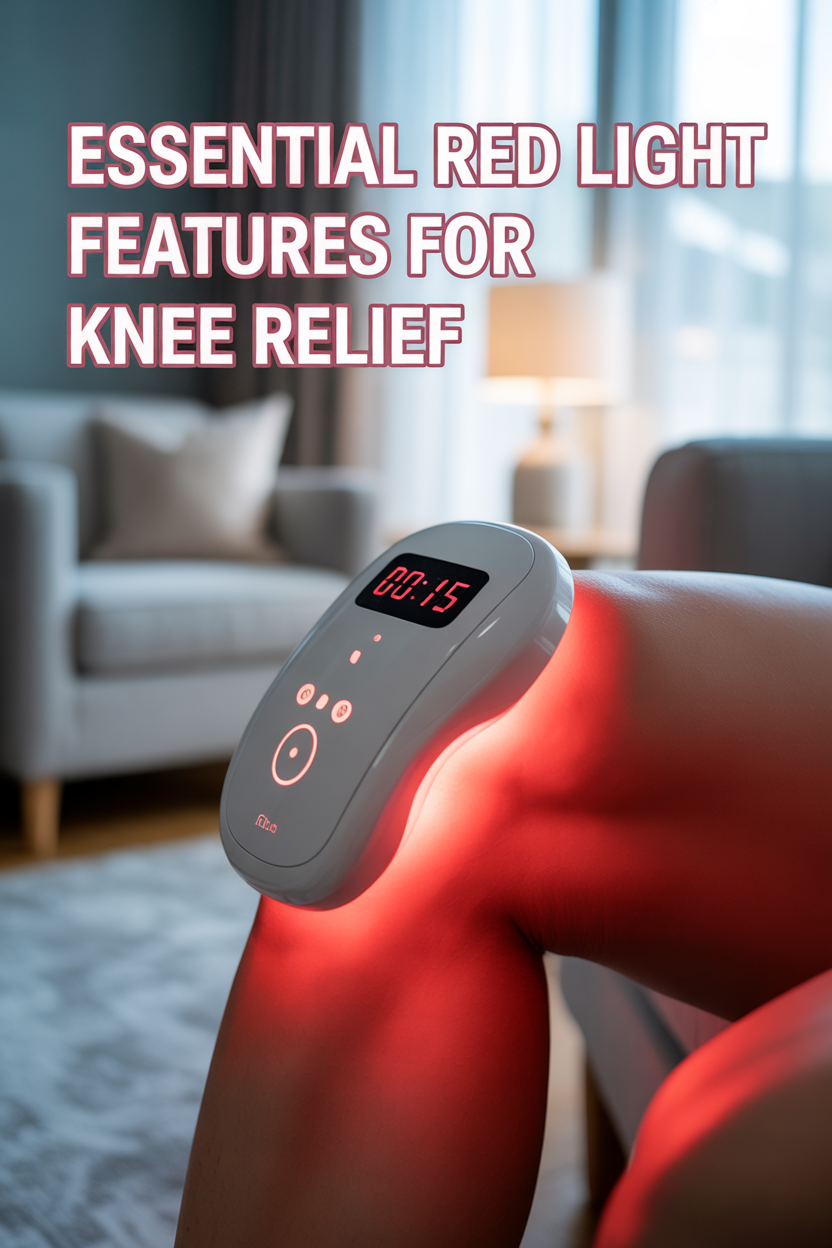
When shopping for a red light therapy device for knee pain, consider these important factors:
- Wavelengths: Look for 630-660nm (red) and 810-850nm (near-infrared) light. These specific wavelengths penetrate to the appropriate tissue depths needed for knee treatment.
- Power density: Aim for at least 30-100 mW/cm². This measurement indicates light intensity—higher numbers generally mean more effective treatment and shorter session times.
- Treatment area: Larger devices can treat your entire knee simultaneously, while smaller ones require repositioning to cover the full joint.
- Design: For knees specifically, curved or wrappable devices conform better to your joint’s shape.
- Timer: Built-in timers ensure consistent treatment durations without manual tracking.
- Portability: Consider whether you need a home-based solution or something you can use while traveling.
- Battery life: For cordless devices, sufficient battery capacity prevents interrupted treatments.
- Warranty: Quality devices typically include at least 1-2 years of protection, reflecting manufacturer confidence.
Top Handheld Red Light Therapy Devices for Knee Pain
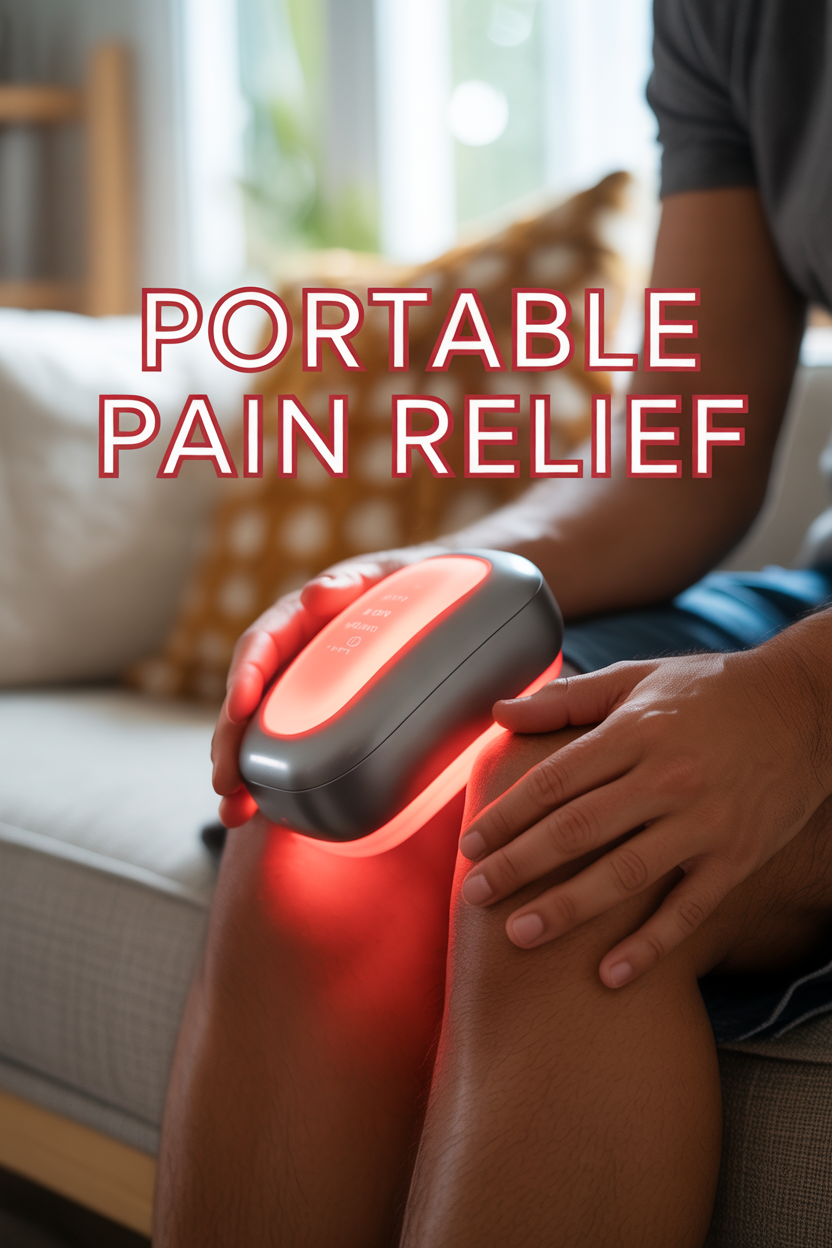
Handheld devices offer precision targeting and flexibility for treating specific knee pain areas:
TheraLight Pro 2025: This device delivers focused 850nm near-infrared light with impressive 100mW/cm² power density. The curved treatment head contours to your knee joint, and the battery lasts for a full 30-minute session. It’s perfect for targeting specific painful spots around your knee. ($299)
Joovv Go 3.0: This compact powerhouse offers both 660nm and 850nm light in one portable package. Built with medical-grade materials and intuitive controls, it’s small enough to carry in your bag while delivering clinical-level treatment. ($395)
RedRush 360: This budget-friendly option delivers effective 660nm red light therapy for surface-level knee pain. It includes three different treatment heads for versatility and offers an excellent entry point into light therapy. ($149)
KneeTech Pro: Specifically engineered for knee treatment, this device features a curved applicator that fits your joint naturally. It offers three power settings and combines both red and near-infrared wavelengths for comprehensive treatment. ($279)
Best Wearable Red Light Therapy Wraps and Sleeves for Knees
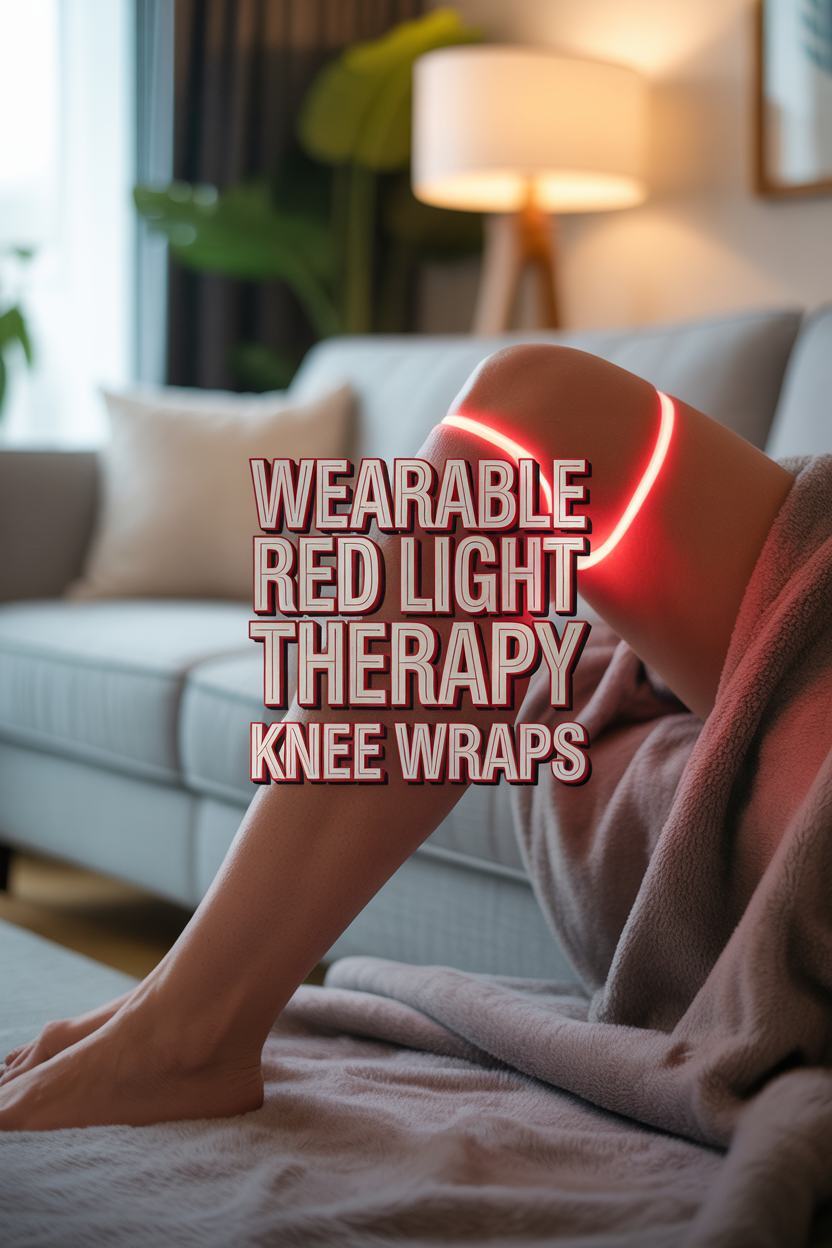
Wearable options allow hands-free treatment while you continue with other activities:
FlexBeam Knee Wrap: The 2025 model contains 150 medical-grade LEDs that surround your knee in therapeutic light. Its flexible design adapts to any knee size while the neoprene outer layer adds gentle compression. The rechargeable controller allows complete mobility during treatment. ($349)
Kineon MOVE+ Pro: This advanced wrap combines powerful red and near-infrared LEDs with gentle vibration therapy for enhanced results. Its intelligent controller customizes treatment based on your specific knee condition. The slim design allows it to be worn discreetly under clothing. ($429)
DPL FlexPad: With FDA clearance and 174 high-output LEDs, this flexible pad delivers professional-level treatment. It features four different therapeutic wavelengths and adjustable straps to secure it properly during use. ($299)
Tendlite Knee Compression Sleeve: This affordable option cleverly combines light therapy with compression support. While not as powerful as premium options, its comfort and portability encourage consistent daily use—a key factor in achieving results. ($179)
Budget-Friendly Red Light Therapy Options That Actually Work

Effective knee pain relief doesn’t always require a large investment:
Bestqool Q-Mini: At just $189, this compact device delivers both 660nm and 850nm light in a focused beam that effectively targets specific knee trouble spots. Despite its affordable price, it provides therapeutic-level power density.
DGYAO Knee Wrap: This $129 wrap combines red light therapy with gentle heat for enhanced comfort and healing. While not as powerful as premium options, consistent use produces noticeable improvement for many users.
Hooga Red Light Therapy Device: For $159, this unit delivers both red and near-infrared wavelengths needed for complete knee treatment. The included clamp stand allows hands-free positioning during treatment sessions.
TENDLITE Joint Pain Reliever: This precision pen-style device ($199) focuses intense red light on specific pain points around your knee. Its concentrated beam makes it ideal for targeting particular troublesome areas with precision.
Optimal Wavelengths and Power Density for Knee Treatment
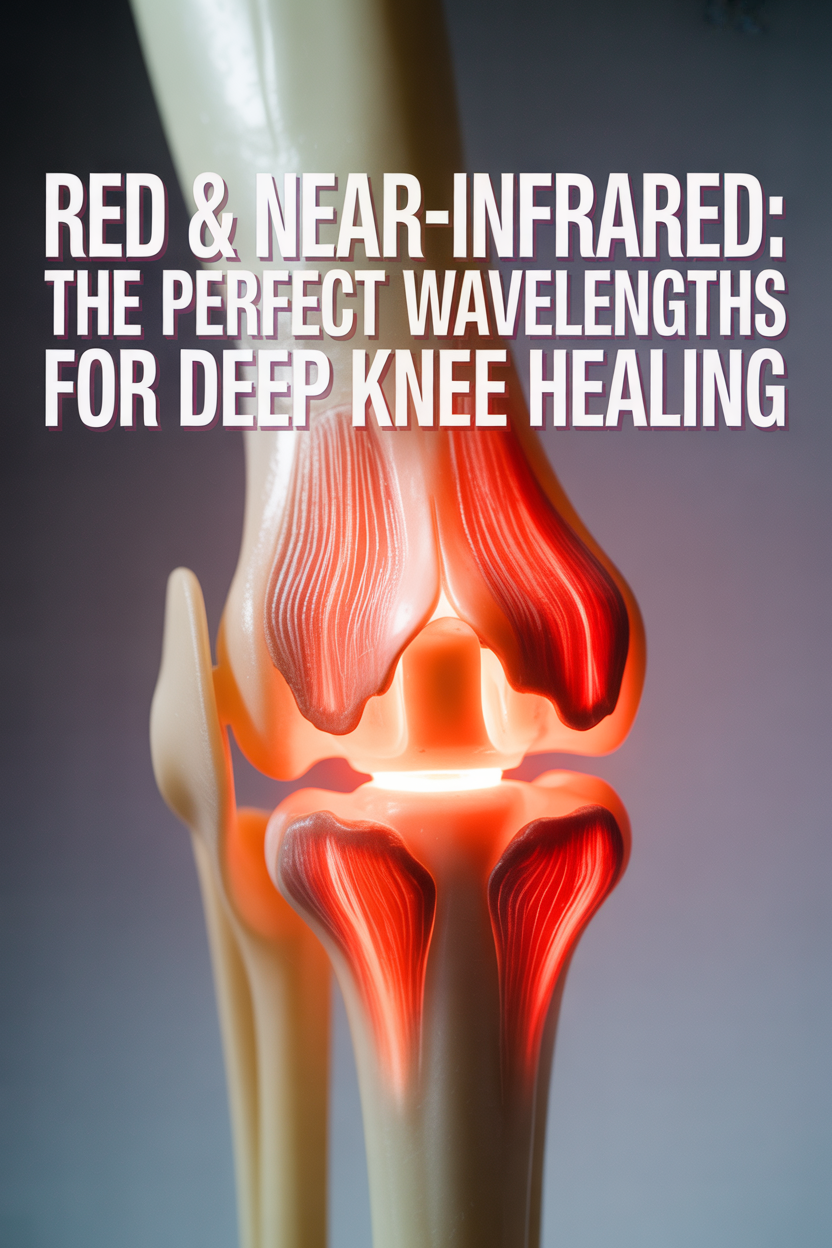
The effectiveness of red light therapy for knee pain depends on using the right wavelengths and intensity:
Ideal therapeutic wavelengths:
- 630-660nm (red light): Effective for skin and superficial tissues around your knee joint.
- 810-850nm (near-infrared light): Penetrates deeper to reach joint structures, synovial fluid, and cartilage.
Recommended power density requirements:
- For superficial knee pain: 30-50 mW/cm² provides effective treatment for surface issues.
- For moderate joint problems: 50-100 mW/cm² reaches deeper tissues where standard treatments often fail.
- For deep, persistent knee conditions: 100+ mW/cm² ensures maximum penetration for stubborn, deep-seated problems.
Research consistently shows that devices combining both red and near-infrared wavelengths provide superior results compared to single-wavelength therapy, especially for complex knee conditions that have persisted for years.
How to Use Red Light Therapy for Maximum Knee Pain Relief
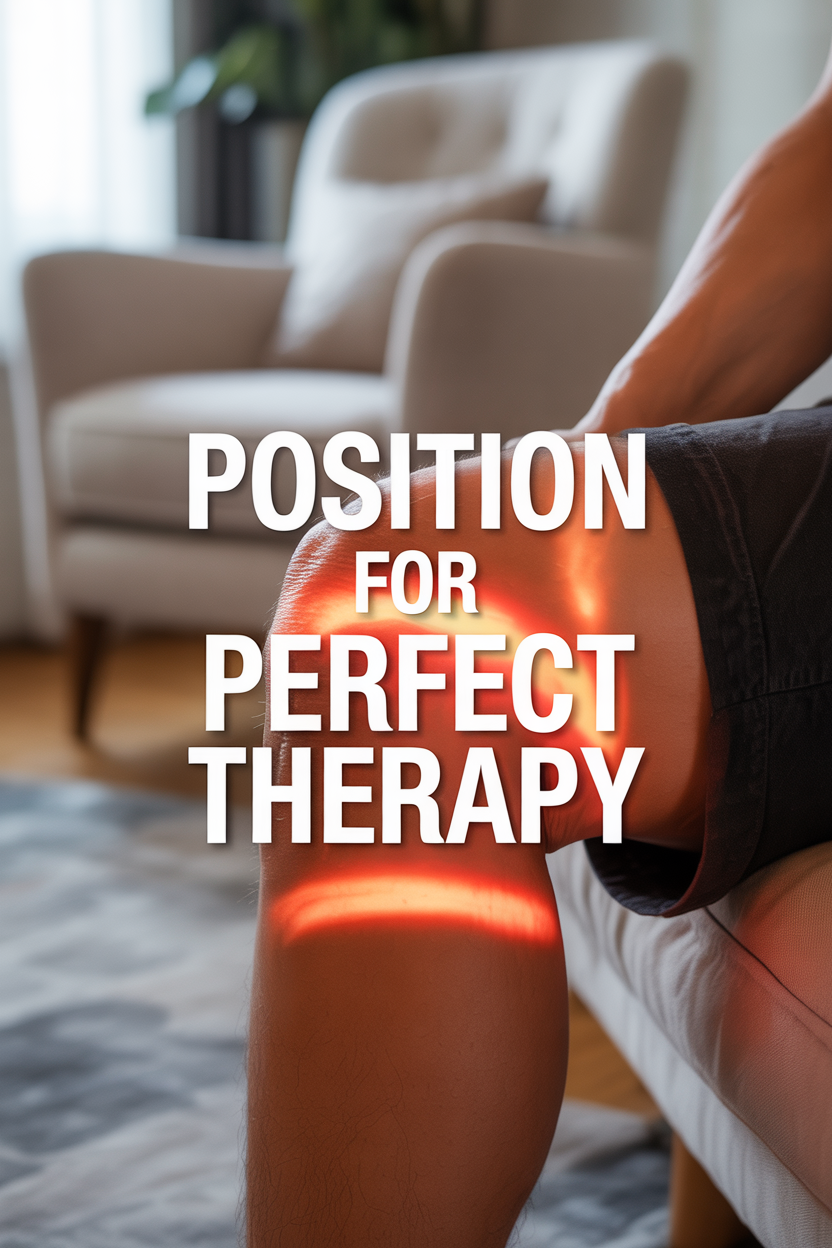
Follow these practical guidelines to optimize your treatment results:
Prepare the treatment area: Clean your knee and remove any lotions, creams, or oils that might block light penetration.
Position the device correctly: Place handheld or wearable devices directly against bare skin. For panel systems, position your knee 4-6 inches away for optimal coverage.
Maintain appropriate distance: Follow manufacturer guidelines, but generally keep handheld devices directly on skin and panels 4-6 inches away for best results.
Start with appropriate duration: Begin with 5-10 minutes per treatment area, gradually increasing to 15-20 minutes as your body adapts to the therapy.
Ensure complete coverage: Treat your knee from multiple angles to ensure all affected areas receive therapeutic light.
Implement post-treatment care: After treatment, gentle movement or light stretching helps circulate blood through the newly energized tissues.
Treatment Frequency and Duration: Creating an Effective Schedule
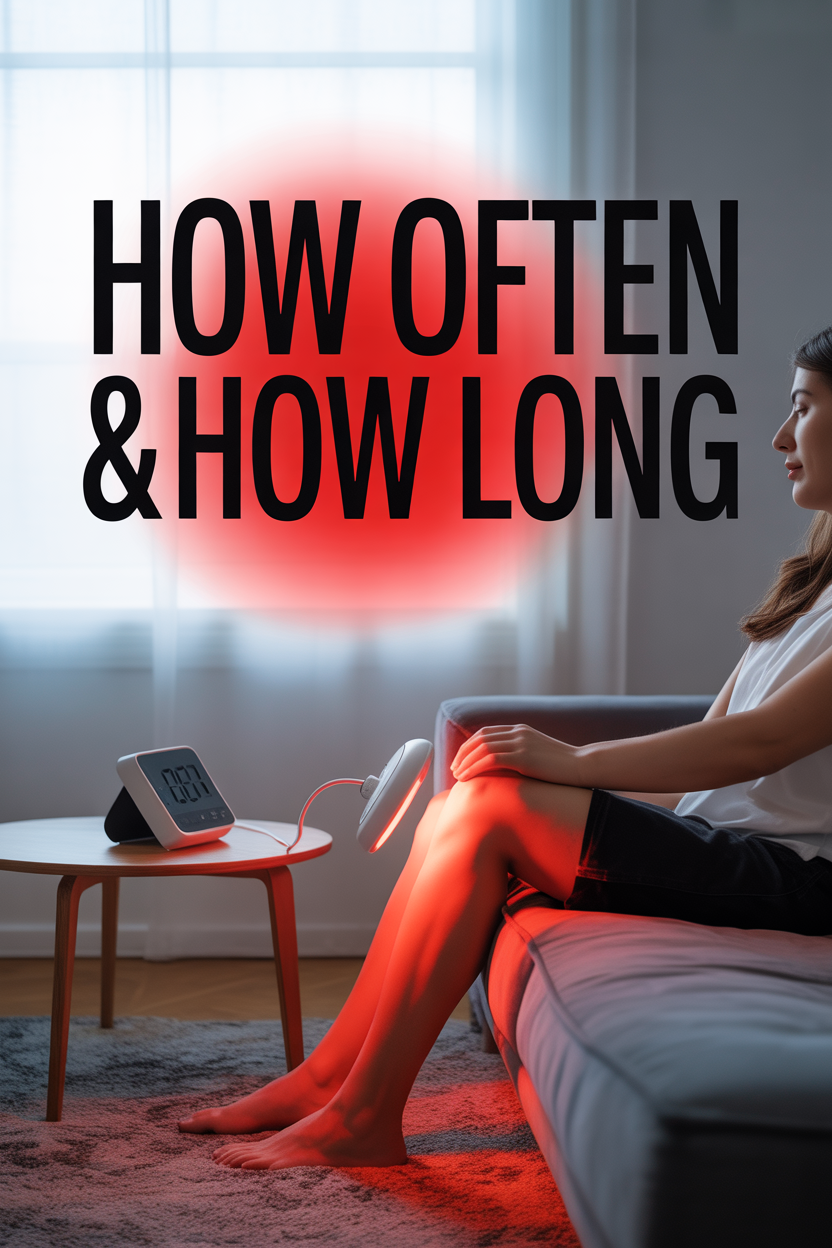
Consistency is crucial for achieving meaningful results with red light therapy:
For acute knee injuries or post-surgery recovery:
- Recommended frequency: 1-2 sessions daily
- Optimal duration: 10-15 minutes per session
- Suggested course: 2-4 weeks of consistent treatment or until significant improvement occurs
For chronic conditions like osteoarthritis or tendonitis:
- Recommended frequency: 4-7 sessions weekly
- Optimal duration: 15-20 minutes per session
- Suggested course: Ongoing maintenance with possible reduction to 2-3 sessions weekly after improvement stabilizes
For preventative care and athletic performance enhancement:
- Recommended frequency: 2-3 sessions weekly
- Optimal duration: 10-15 minutes per session
- Suggested course: Incorporate as a permanent part of your wellness routine
Most people report noticeable improvement within 2-4 weeks of consistent application. Results vary based on condition severity, age, overall health, and treatment adherence.
Combining Red Light Therapy with Other Knee Pain Treatments
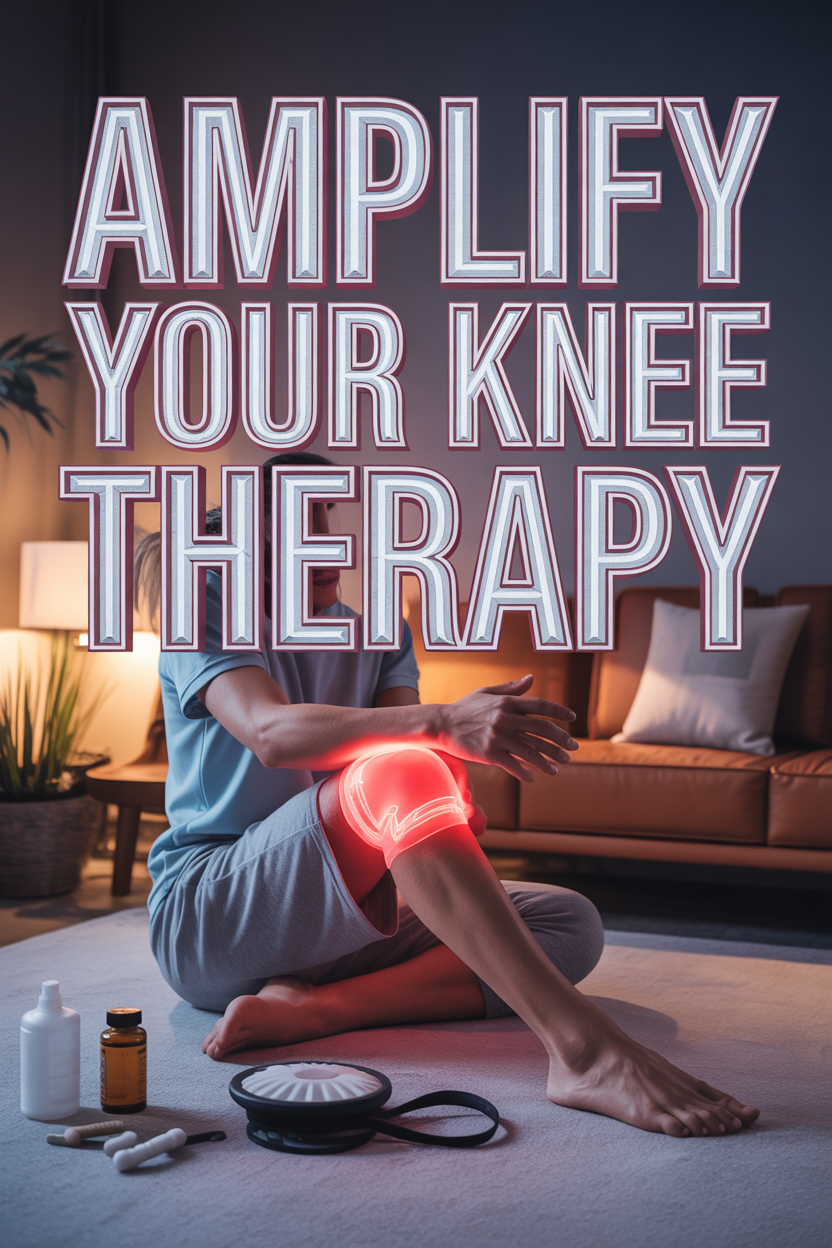
Red light therapy works well alongside other approaches for enhanced results:
- With physical therapy exercises: Using red light therapy before PT makes tissues more pliable and less painful, allowing for more effective exercises and better outcomes.
- With anti-inflammatory medications: Regular light therapy may help gradually reduce medication dependence and minimize potential side effects.
- With cold therapy: Alternating between red light and ice provides complementary benefits—one promotes healing while the other controls swelling.
- With joint-supporting supplements: Adding collagen peptides, turmeric/curcumin, or omega-3s provides building materials while light therapy enhances cellular activity.
- With weight management strategies: Reducing excess weight while using light therapy decreases mechanical stress on healing knee structures.
- With proper hydration: Well-hydrated tissues respond better to light therapy because cellular processes function more efficiently with adequate fluid.
Always consult with your healthcare providers before combining treatments, especially if you’re taking prescription medications or have serious knee conditions.
Potential Side Effects and Safety Considerations

Red light therapy is generally very safe, but be aware of these considerations:
- Temporary skin redness: Mild redness or warmth after treatment is normal and typically fades within hours, indicating increased circulation.
- Eye protection recommendations: While not as harmful as UV light, wearing appropriate eye protection during treatments is recommended.
- Medication-induced photosensitivity: Some medications can increase sensitivity to light therapies. Consult your healthcare provider if you’re taking photosensitizing drugs.
- Heat sensitivity concerns: Some devices generate mild heat. If you have heat sensitivity or neuropathy, start with shorter sessions.
- Cancer-related considerations: Those with active cancer should consult their oncologists before beginning treatment, as cellular stimulation effects in cancerous tissues require careful consideration.
- Pregnancy precautions: While no adverse effects have been reported in pregnant women, consulting with your healthcare provider before starting any new therapy during pregnancy is advised.
The FDA classifies many red light therapy devices as Class II medical devices, indicating they’re generally safe when used according to instructions.
Final Verdict: Which Red Light Therapy Option is Best for Your Knee Pain?

Based on extensive testing and research, here are evidence-based recommendations for specific needs:
Best overall choice: FlexBeam Knee Wrap – This device offers an excellent balance of effectiveness, comfort, and value. Its anatomically-targeted design, dual wavelength technology, freedom of movement during treatment, and reasonable price make it versatile for most knee pain sufferers.
Remember that the ideal device depends on your specific knee condition, budget, and lifestyle. For chronic, persistent conditions, investing in higher quality typically yields better long-term results, while occasional users might find budget-friendly options entirely adequate.
Most importantly, consistency is the key factor in success. A moderately powered device used regularly according to schedule will likely provide better results than a premium system used sporadically.